
This project was designed for an agarwood essential oil extraction project in Vietnam.
In aromatic material markets, agarwood may also be associated with Aquilaria species such as Aquilaria agallocha.
Project Background
Agarwood is a high-value aromatic raw material.
For this project, the customer planned to use CO2 extraction equipment to process agarwood wood material and obtain agarwood aromatic oil / resinous extract for further refinement.
HiURTB reviewed the raw material form, target extract, pre-processing requirement, extraction process, and downstream post-processing needs before final equipment configuration.
Raw Material
The raw material for this project was customer-supplied agarwood wood material.
Some high-value agarwood materials are also marketed as Qi-Nan / Kynam agarwood, depending on material grade, origin, and market classification.
According to the hardness and form of the agarwood material, we recommended and supplied a multi-stage grinding process before CO2 extraction.
After manual splitting, the material preparation process can include coarse crushing, medium grinding, fine grinding, and cold-air grinding.
Proper raw material preparation helps improve material loading, CO2 contact, extraction stability, and downstream oil collection.

Why CO2 Extraction for Agarwood Essential Oil
CO2 extraction is suitable for high-value aromatic raw materials such as agarwood.
Compared with traditional extraction methods, CO2 extraction can work under relatively lower temperature conditions and can help protect aroma-sensitive components.
Before final project confirmation, the customer sent us agarwood material samples for CO2 extraction testing.
The test provided initial validation of pressure, temperature, and CO2 flow conditions for agarwood aromatic oil extraction.
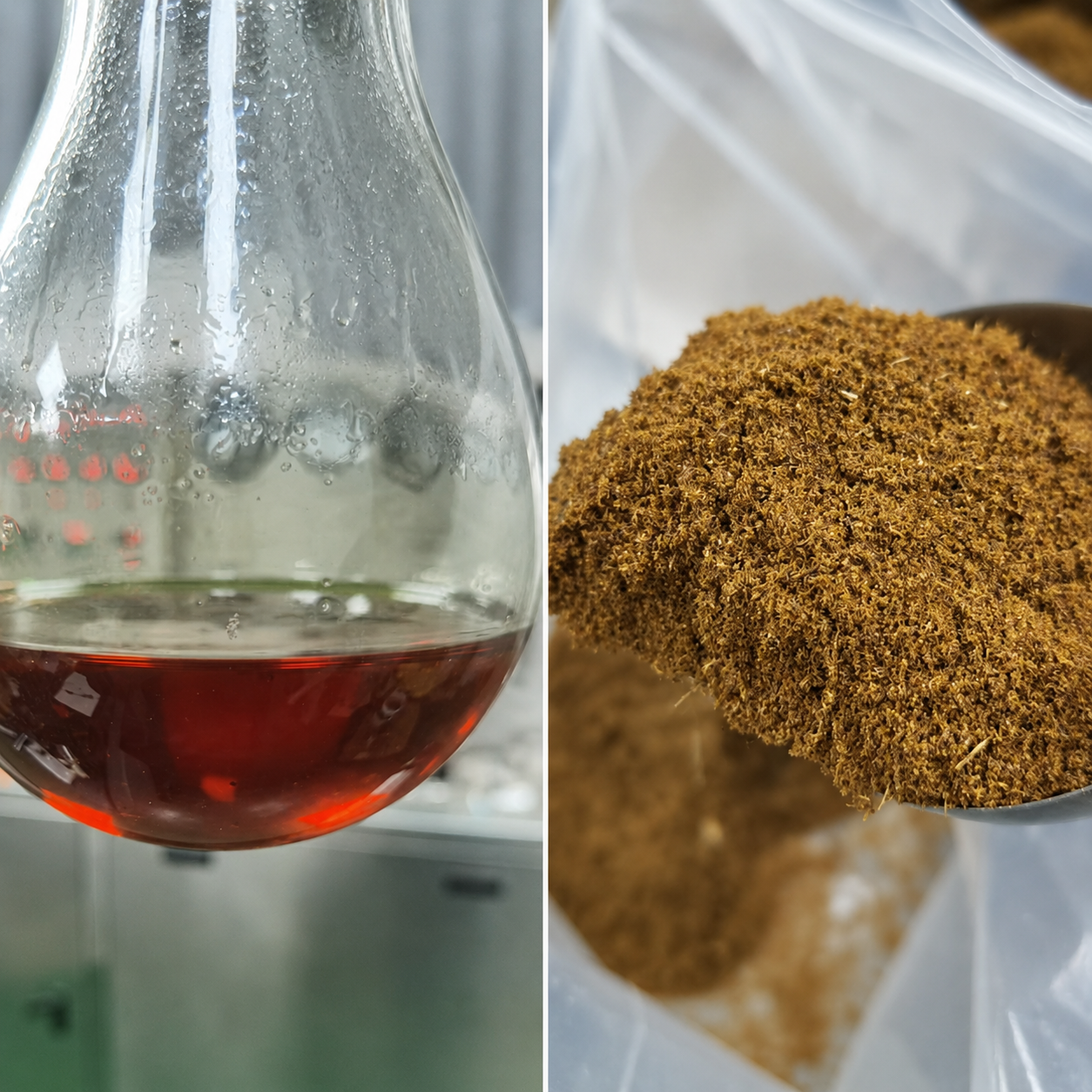
The following picture shows the prepared ground agarwood material and the aromatic oil obtained from CO2 extraction and post-processing testing.
Main Equipment Delivered
The project included supercritical CO2 extraction equipment and related post-processing equipment, as below.
Supercritical CO2 Extraction System
Multi-Stage Grinding Equipment
Rotary Evaporator
Short Path Distillation Kit
Our CO2 extraction system was used to extract aromatic oil / resinous extract from agarwood wood material.
Our multi-stage grinders were used for raw material size reduction before extraction.
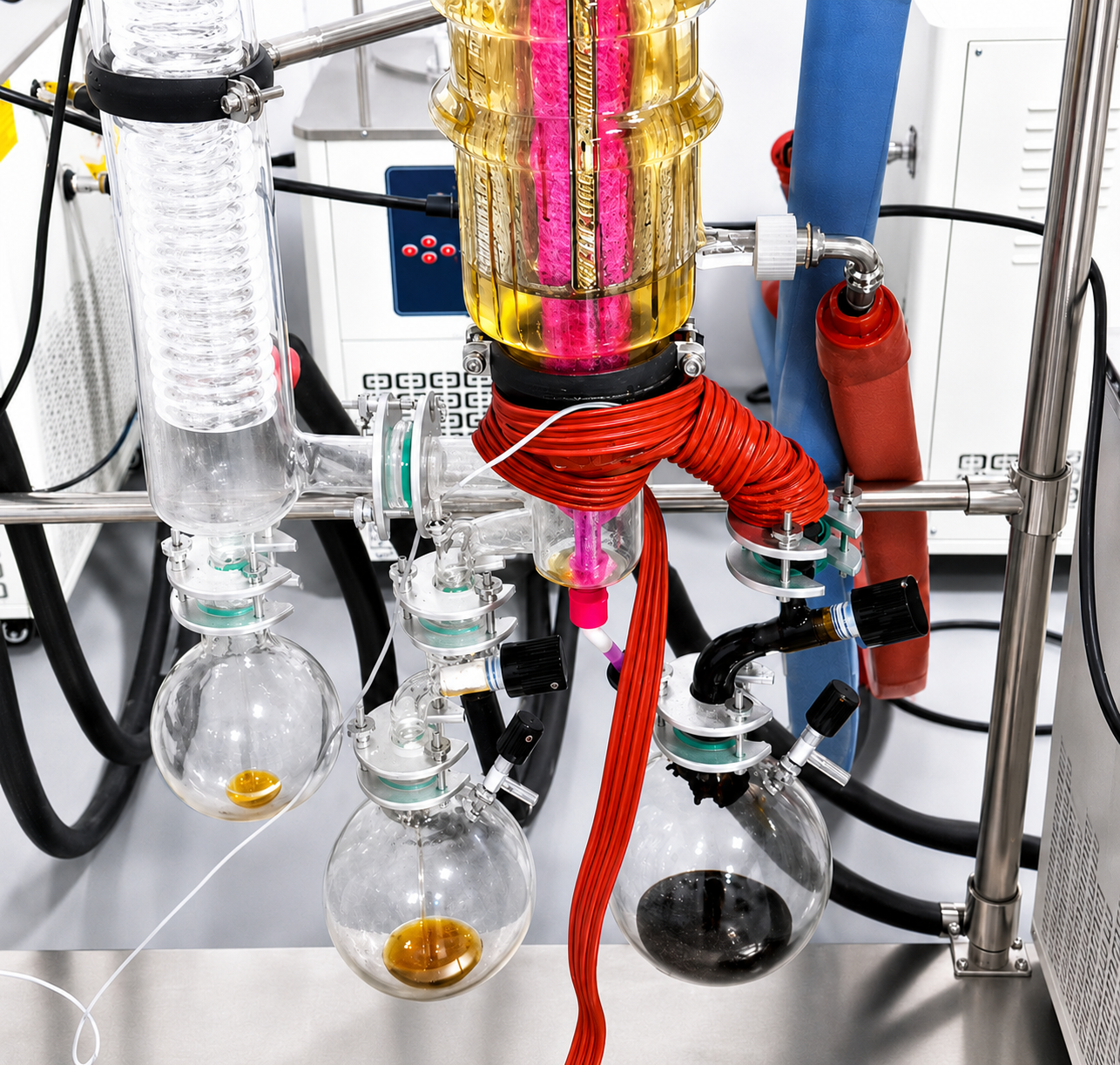
The rotary evaporator and short path distillation kit were configured for downstream post-processing, oil stability improvement, and further refinement according to the target oil quality requirement.
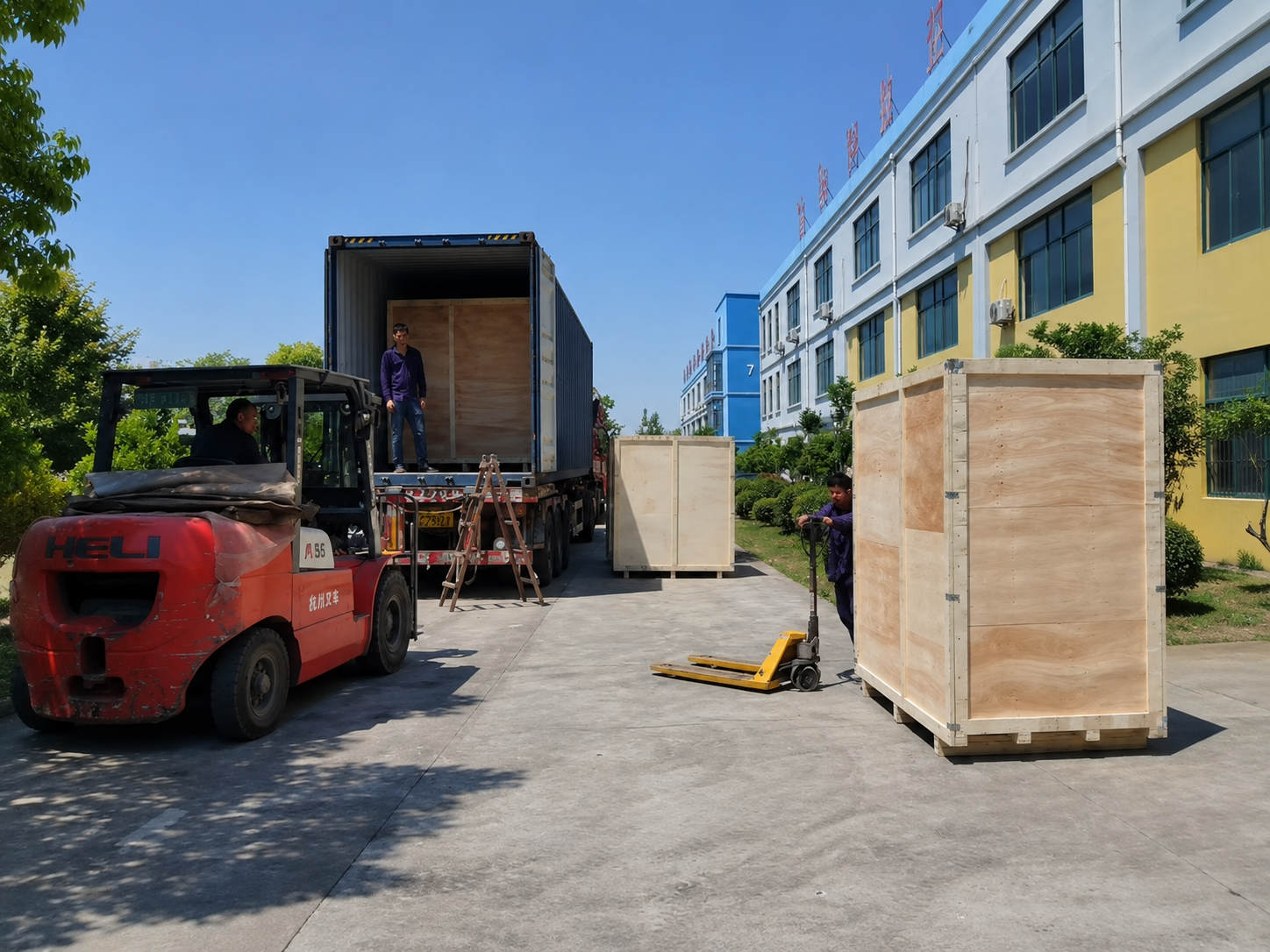
After equipment manufacturing, testing, and packing, the complete system was shipped to Vietnam in early May 2026.
Project Delivery
The project included not only equipment supply, but also factory packing, international shipment, on-site installation, operator training, and practical post-processing configuration.
Our engineering team completed overseas installation and operator training in about 10 days.
After one day of basic training, the operators understood the main operation logic of the CO2 extraction system and were able to operate the equipment under guidance.
Pre-Treatment Before Short Path Distillation
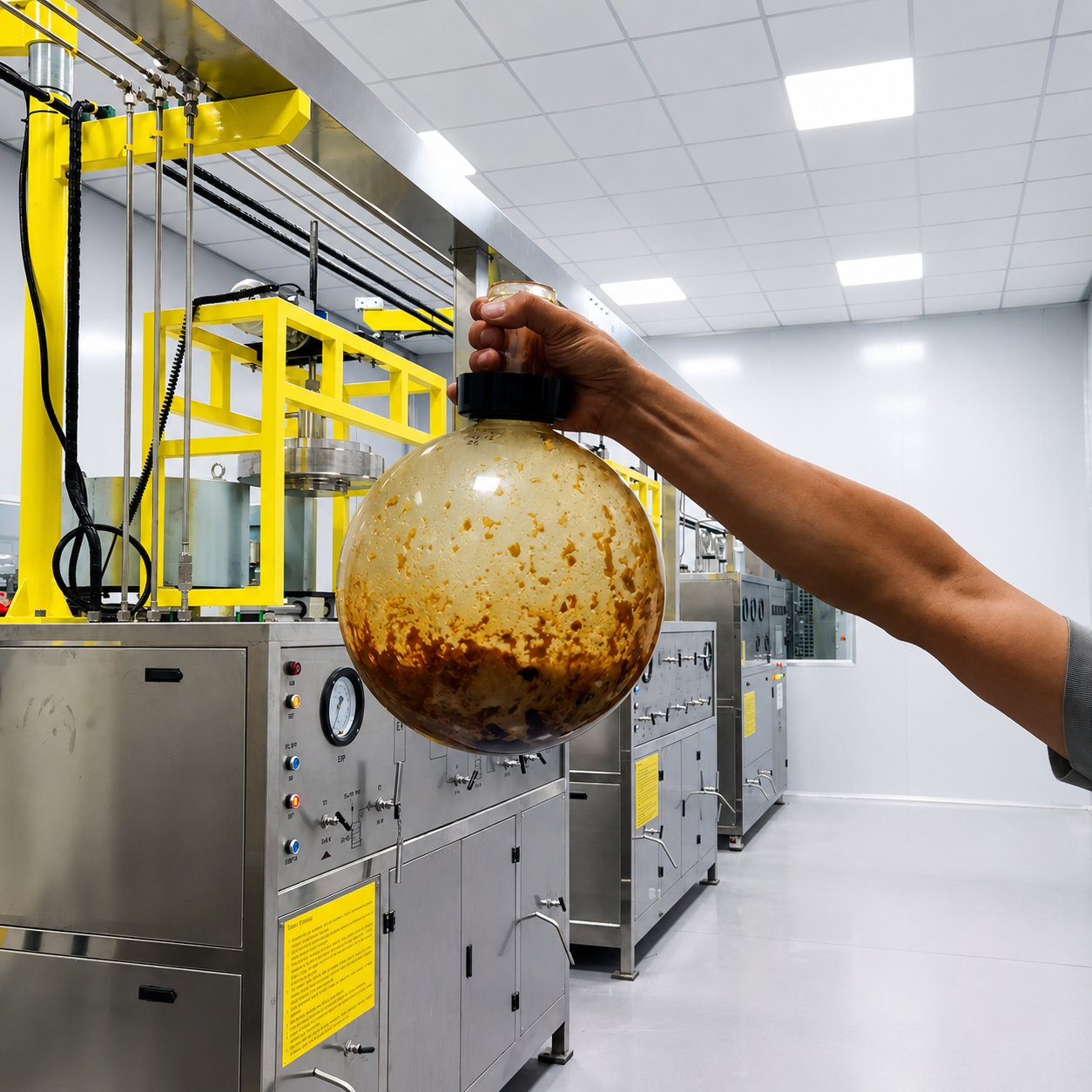
For this agarwood CO2 extract, rotary evaporation was used as a pre-treatment step before short path distillation.
The purpose of this step was vacuum degassing, removal of trapped gas and moisture, and preparation of the viscous resinous extract before further distillation.
For resinous and viscous extracts such as agarwood CO2 extract, vacuum degassing and moisture reduction are usually recommended before short path distillation or molecular distillation.
This helps reduce foaming, trapped gas, and unstable feeding during distillation.
Process Flow
Different CO2 extracts require different post-processing routes.
For resinous and viscous extracts such as agarwood CO2 extract, vacuum degassing and moisture reduction are usually recommended before short path distillation or molecular distillation.
This helps reduce foaming, trapped gas, and unstable feeding during distillation. The process flow was below:
Agarwood Wood Material → Cutting / Splitting → Multi-Stage Grinding → CO2 Extraction → Separation & Oil Collection → Vacuum Degassing / Moisture Reduction by Rotary Evaporation → Short Path Distillation → Light Aromatic Oil + Heavy Fraction
For low-viscosity volatile oils, simple oil collection, settling, filtration, or mild vacuum treatment may be enough.
For wax- and lipid-rich CO2 crude extracts, such as cannabis or hemp crude oil, winterization is commonly used to remove precipitable waxes and part of the lipid impurities before solvent recovery and distillation.
CO2 Crude Oil → Ethanol Dilution → Winterization & Filtration → Ethanol Recovery → Decarboxylation / Degassing → Distillation
Project Summary
This Vietnam agarwood extraction project included raw material preparation, sample extraction testing, supercritical CO2 extraction, post-processing configuration, factory packing, overseas shipment, and on-site installation and training.
This project can also provide a practical reference for other high-value botanical extraction projects where raw material preparation, CO2 extraction, oil collection, and downstream post-processing need to be reviewed together.
If you are planning a similar agarwood essential oil, botanical extract, or natural aromatic oil project, you may share your raw material, target extract, daily capacity, working hours, and post-processing requirements for configuration review.
Sample extraction testing can also be discussed before final equipment confirmation. For more testing examples, please visit our related article.

