
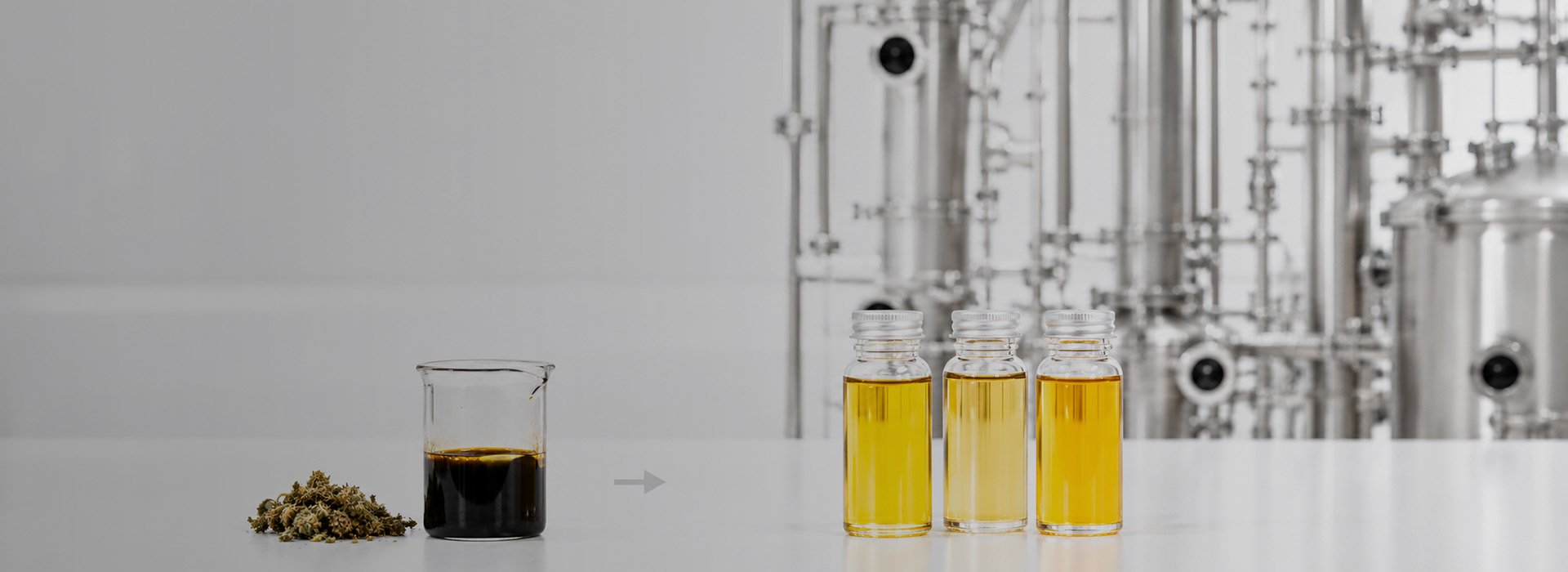
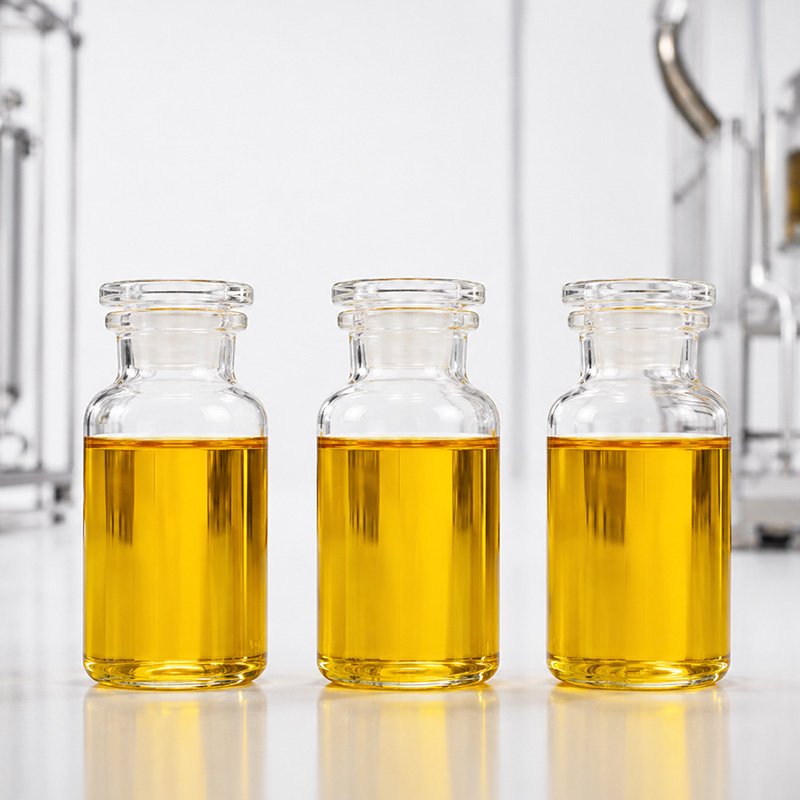
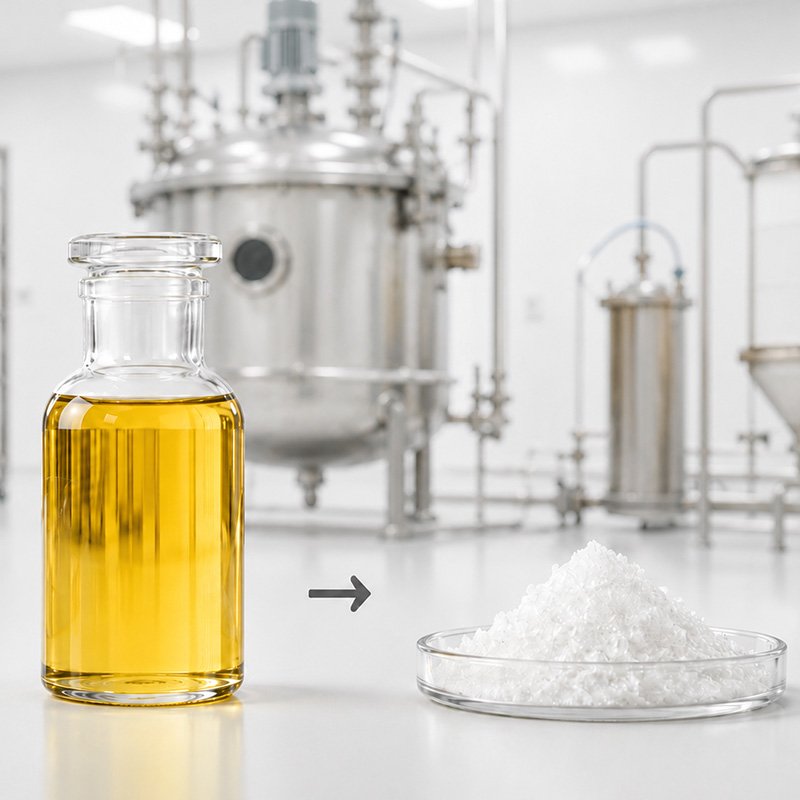
Why HiURTB Cannabis Distillation Equipment Matters
- Standardized crude oil refining
- Consistent CBD & THC content
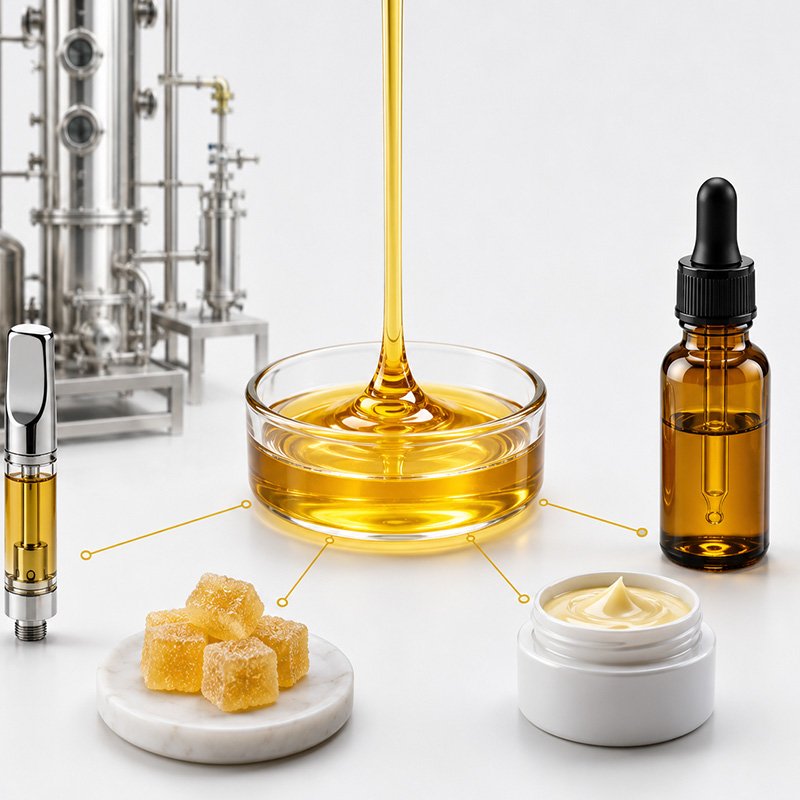
- Universal base distillate for multiple end products
- Higher-value conversion of low-grade biomass
- Distillate ready for further refining & isolate production
Your Professional Cannabis Distillation Equipment Manufacturer
HiURTB is a professional cannabis distillation equipment manufacturer in China for B2B cannabis and hemp processing projects.
We supply short path distillation kits, wiped film distillation equipment, molecular distillation systems, and matched vacuum, heating, cooling and collection systems for CBD / THC crude oil refining.
Instead of supplying only a single distillation machine, we help processors configure a complete distillation system with properly matched main unit and supporting equipment.
We recommend cannabis distillation equipment according to your crude oil source, daily processing capacity, target distillate, existing pre-treatment process, facility condition and budget.
Whether your project is for lab testing, pilot production or commercial oil refining, we help review a practical CBD or THC distillation equipment configuration instead of offering a fixed standard package.
Optional explosion-proof design, local voltage and electrical configuration, technical documents, installation guidance and GMP-ready configuration options can also be reviewed according to project location and facility requirements.
We also supply related upstream and downstream equipment matching when your project requires winterization, filtration, solvent recovery, decarboxylation, degassing or further refining. Contact us now for efficient support.
Cannabis Distillation Equipment Options
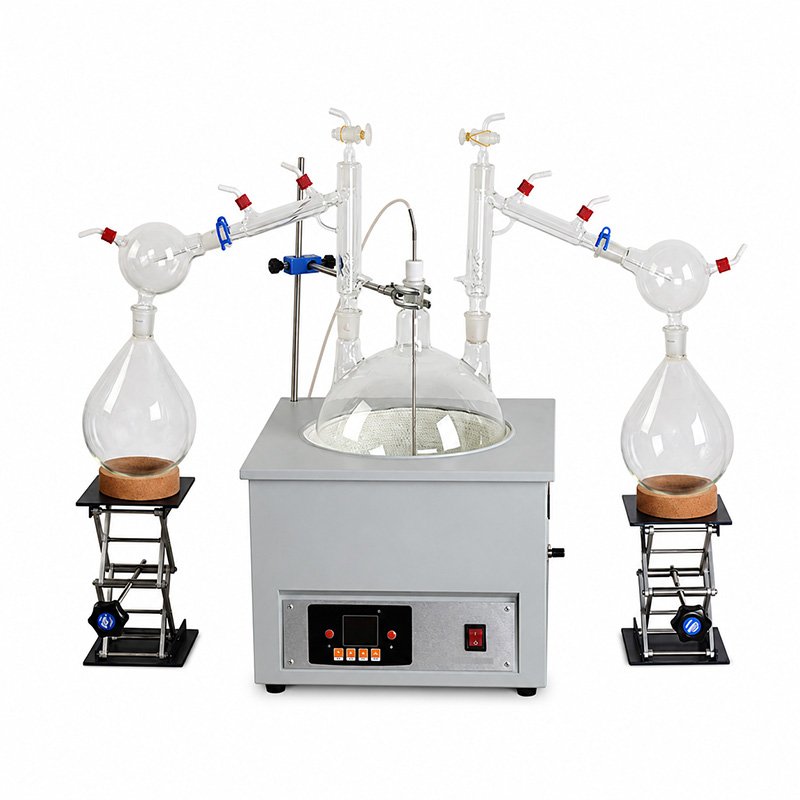
For lab testing, small-batch crude oil refining and budget-sensitive cannabis distillate projects.
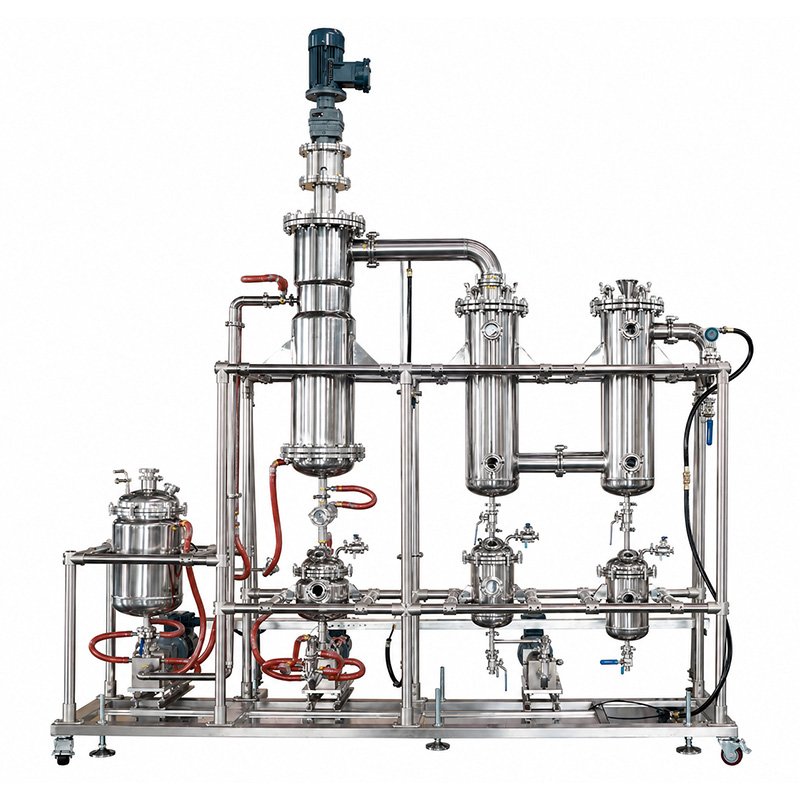 Wiped Film Distillation Equipment
For commercial cannabis crude oil processing with shorter residence time and continuous feeding.
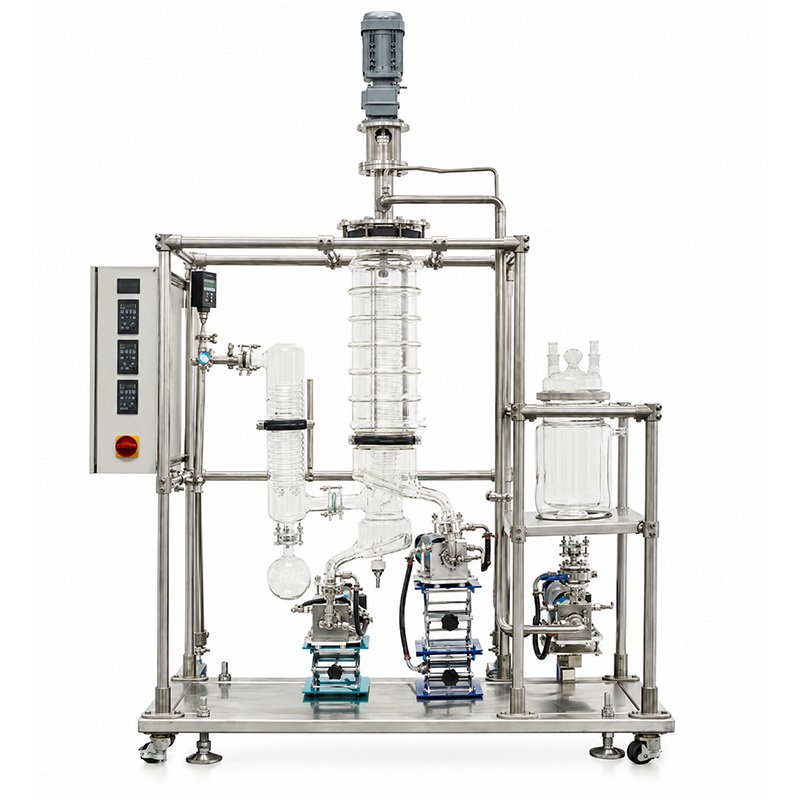 Molecular Distillation Equipment
For high-vacuum cannabinoid separation and heat-sensitive CBD / THC oil refining.
Why You Need HiURTB Cannabis Distillation Equipment

Spreads viscous crude oil into a thin film or short evaporation path for efficient heat transfer.

Reduces long-time heating risk for heat-sensitive cannabinoids.

Supports lower-temperature separation for CBD / THC crude oil.

Feed tank, pump and pre-heating line help improve continuous feeding.

Heating circulator, condenser and chiller can be configured together.

Captures volatiles and light fractions before they enter the vacuum pump.

Separate receivers support main distillate collection and heavy residue discharge.

Accessible glass or stainless steel parts help reduce cleaning difficulty and downtime.
Protect Distillate Quality
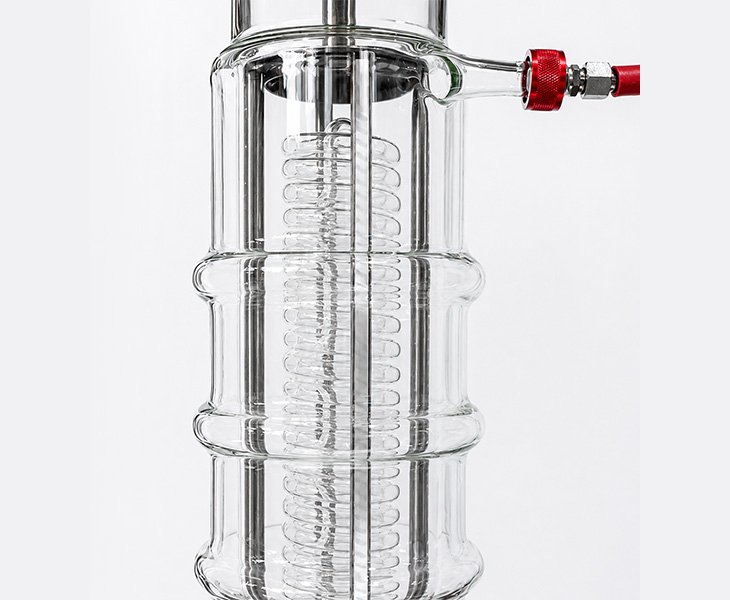
HiURTB cannabis distillation equipment can be configured with short path, wiped film or molecular distillation design to reduce material residence time during evaporation.
It solves the quality risk caused by long-time high-temperature heating, such as darker distillate color, inconsistent oil viscosity, heavier residue and unstable final product quality.
With proper vacuum and temperature control, our system supports lower-temperature separation and preserve active CBD/THC ingredients under vacuum, helping you refine CBD / THC crude oil with better consistency, cleaner appearance and more stable production results.
Keep Crude Oil Feeding Stable
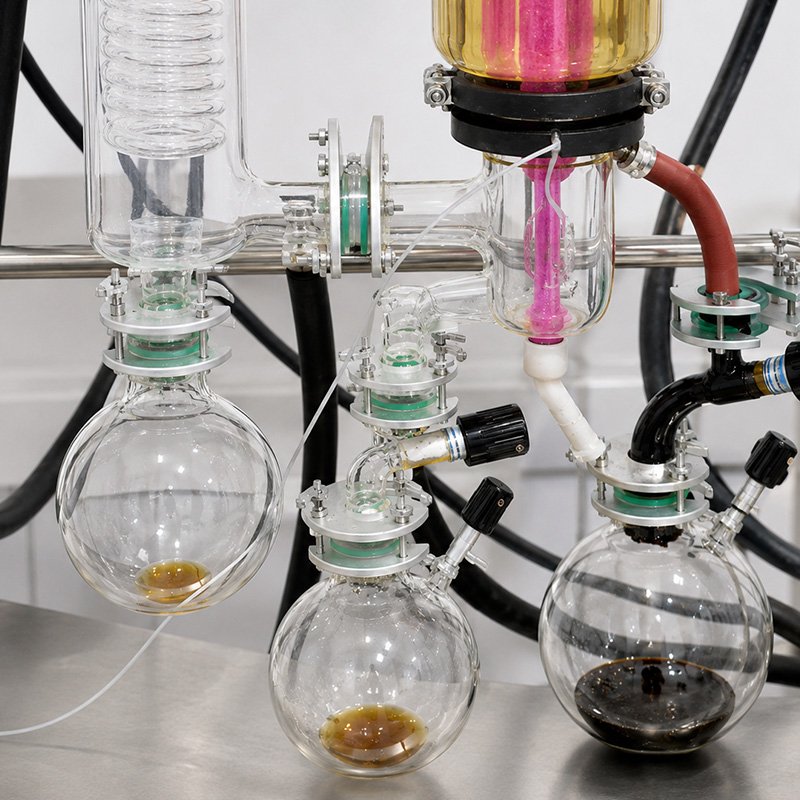
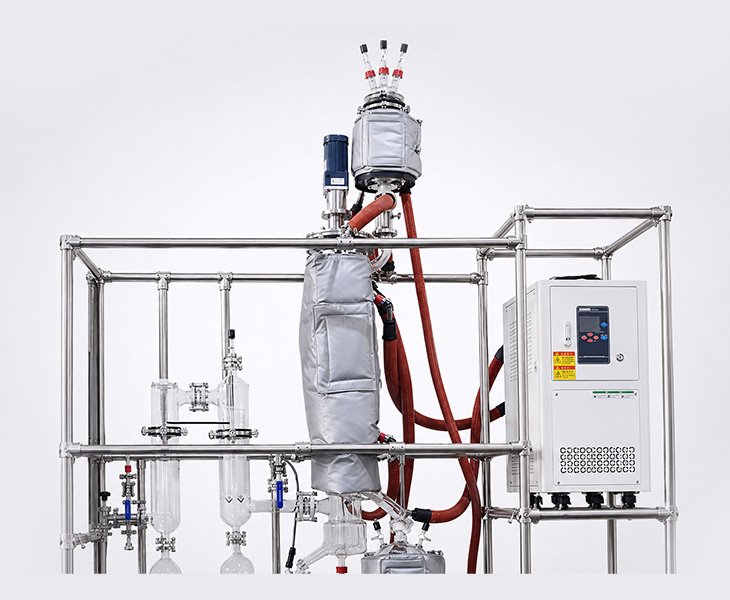
HiURTB cannabis distillation equipment can be configured with feed tank, metering pump, pre-heating line, heated transfer pipeline, distillate receiver, residue receiver and discharge design.
Proper pre-heating and controlled feeding eliminate interruptions, uneven thin film formation, irregular distillate collection and low throughput when processing high-viscosity cannabis crude oil, winterized oil or decarboxylated oil after solvent recovery and concentration.
You will enjoy steady, trouble-free continuous production and cut down manual operation labor costs on your daily refining runs.
Stabilize Vacuum and Condensation
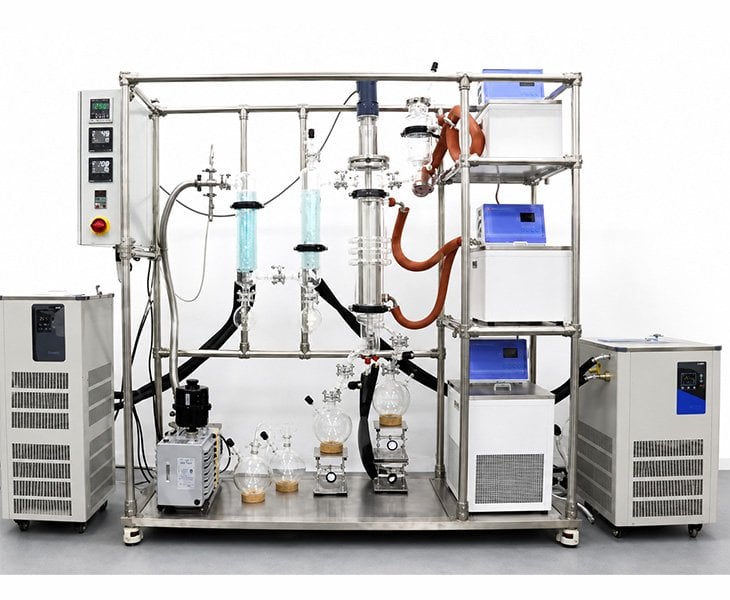
Besides evaporator body, HiURTB can match the vacuum pump, heating circulator, condenser, process chiller and cold trap according to crude oil condition, target distillate and production scale.
This solves problems caused by mismatched supporting units, such as vacuum fluctuation, incomplete condensation, poor recovery, volatile carryover into the vacuum line, pump oil contamination and higher vacuum pump maintenance.
With our matched heating, cooling, condensation and cold trap protection, our cannabis distillation equipment supports stable vacuum operation, efficient fraction collection and better long-term equipment reliability.
You can maintain consistent distillate color & yield, extend your vacuum pump service life and lower your long-term factory operating expenses.
Project-Based Cannabis Distillation Equipment Support
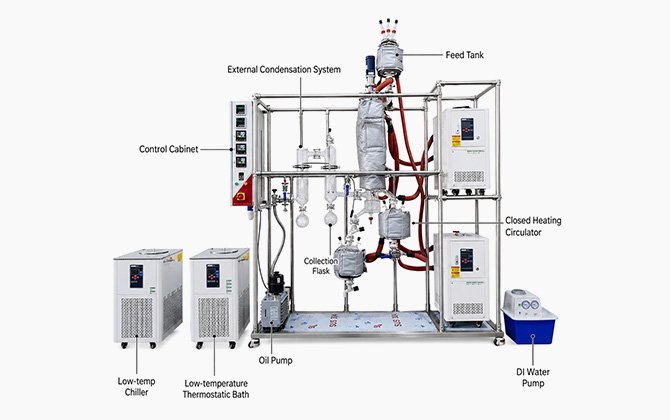
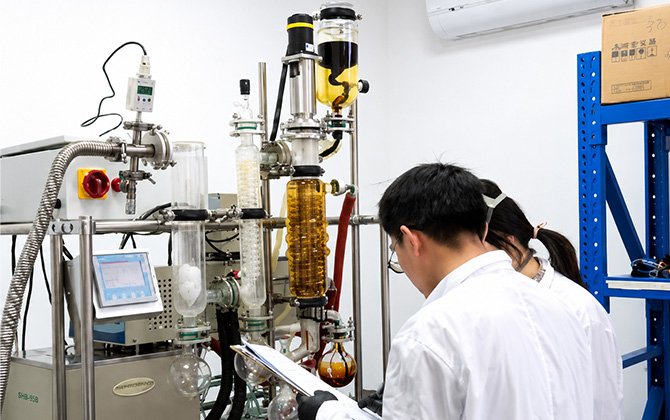
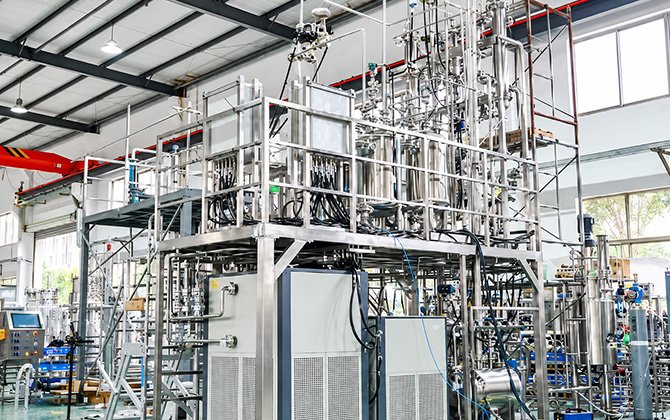
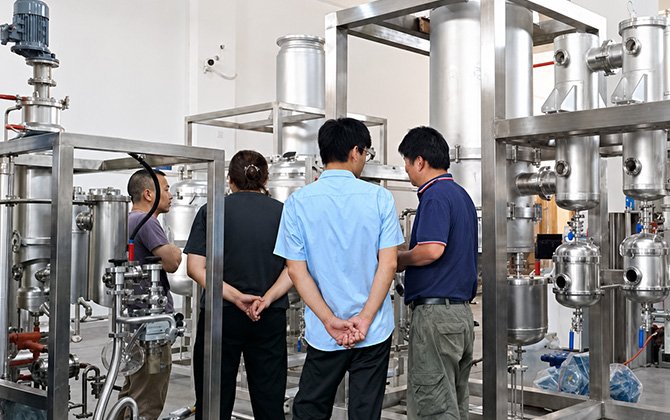
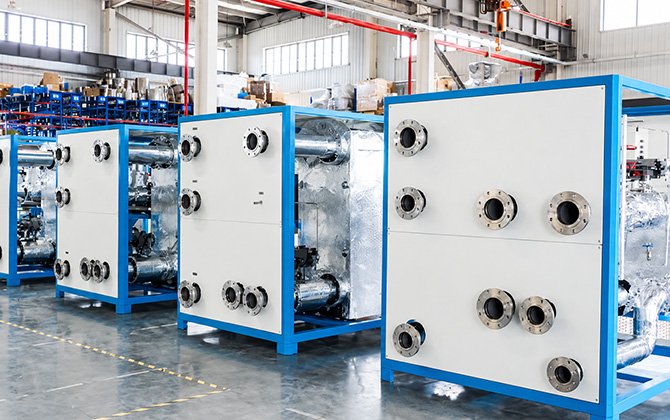
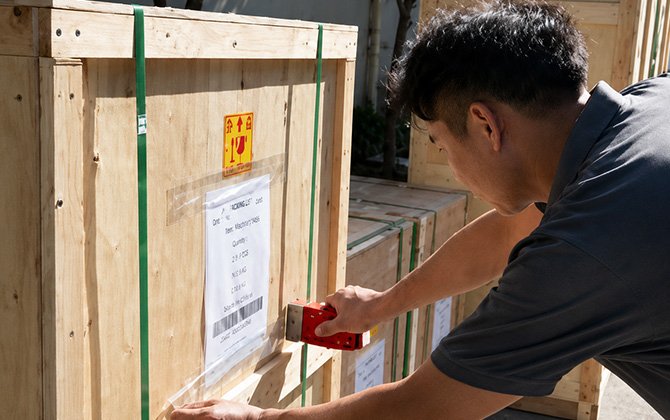
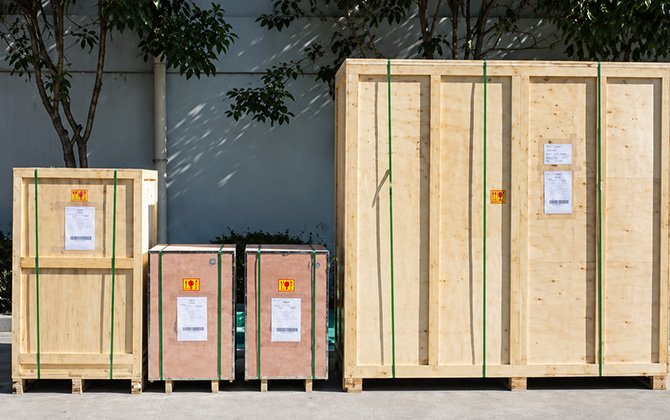
HiURTB focuses on CO2 extraction and post-processing equipment for cannabis, hemp, essential oil and botanical projects. For cannabis distillation projects, we support complete system configuration, including distillation unit, vacuum, heating, cooling, collection and related upstream / downstream equipment matching.
From equipment selection to factory testing, installation guidance, operator training and after-sales support, we help you build practical crude oil to distillate workflows for lab, pilot, commercial and industrial production.
Cannabis Oil Distillation Solutions by Production Target
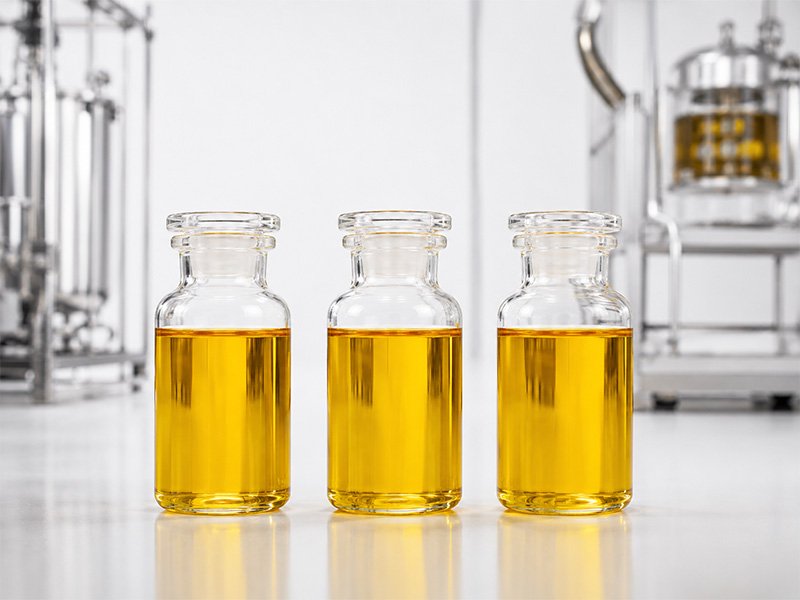
For hemp crude oil refining after winterization, filtration, solvent recovery and decarboxylation.
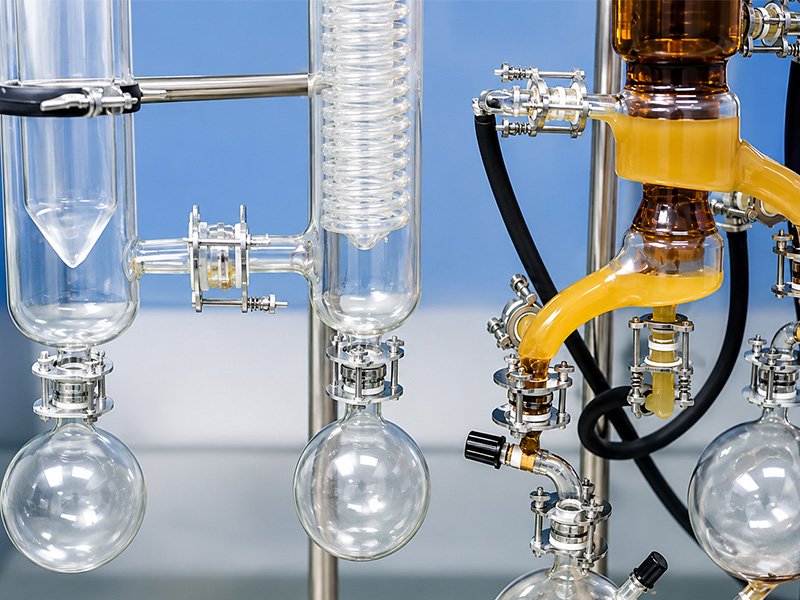
For licensed cannabis processors requiring stable crude oil refining and distillate collection.
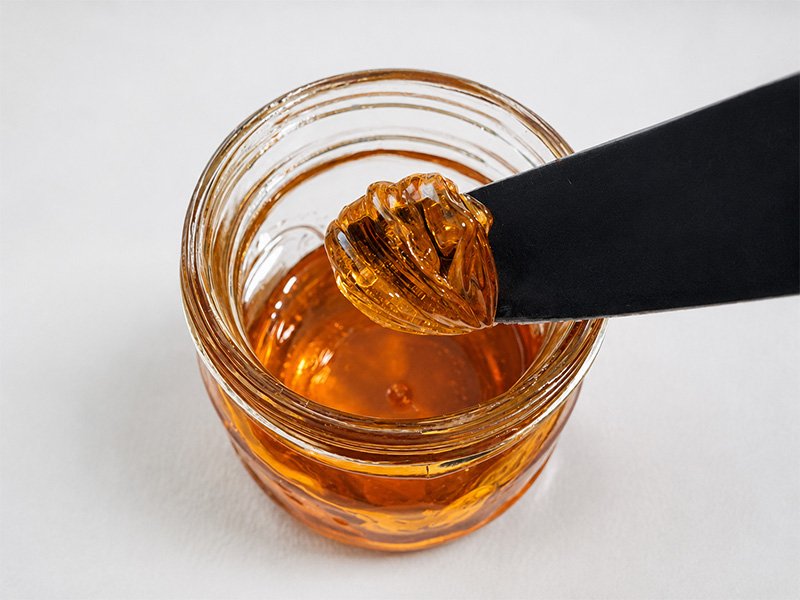
For processors who need cleaner, more standardized cannabinoid-rich oil without over-processing.
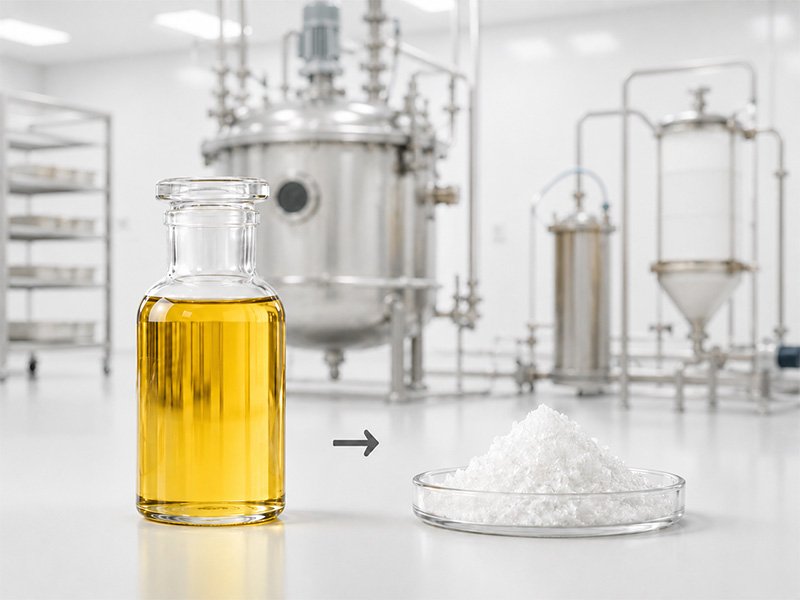
For projects that need distillation before crystallization, filtration and drying.
More About Our Cannabis Distillation Equipment
- Cannabis Distillation Equipment Selection
- Overview of Cannabis Distillation Equipment Models
- Cannabis Distillation Equipment Comparison
- Cannabis Distillation Equipment Quotation Checklist
| Parameter | Available Range / Options | Notes |
| Equipment Type | Short Path Distillation Kit / Wiped Film Distillation Equipment / Molecular Distillation System / Thin Film Evaporator | Selected according to crude oil condition, capacity and target distillate |
| System Type | Glass type / Stainless steel type | Glass type for lab and pilot use; stainless steel type for pilot and commercial production |
| Application Scale | Lab / Pilot / Commercial Production | Depends on daily crude oil processing capacity |
| Feed Material | Cannabis crude oil / Hemp crude oil / Winterized oil / Decarboxylated oil / Distillate / Resinous extract | Material should be reviewed before equipment selection |
| Processing Purpose | Solvent removal / Light fraction removal / Cannabinoid concentration / Distillate production / Further refining | Different purpose may require different system configuration |
| Feed Rate | Approx. 0.05–500 L/h | Actual capacity depends on viscosity, pre-treatment, vacuum, temperature and number of passes |
| Evaporation Area | Approx. 0.06-5 m² | Larger evaporation area supports higher throughput |
| Condenser Area | Approx. 0.1-15 m² | Matched with evaporation area, vapor load and cooling requirement |
| Feed Tank Volume | Approx. 0.5-50 L or customized | Larger stainless steel systems can use external feed tanks |
| Collection System | Light fraction receiver / Main distillate receiver / Heavy residue receiver | Receiver design depends on process route and fraction collection needs |
| Working Temperature | Up to 300-350°C depending on system type | Final temperature range depends on material and process requirement |
| Vacuum Level | High vacuum / deep vacuum configuration available | Short path molecular distillation systems lowest operating pressure ≤ 0.001 mbar |
| Rotation / Wiper Speed | Approx. 50-460 rpm for glass systems; variable speed for stainless systems | Helps film formation and material distribution |
| Feeding Mode | Manual feeding / Pump feeding / Metering pump feeding / Continuous feeding | Continuous feeding is more suitable for commercial production |
| Discharge Mode | Collection flask / Manual discharge / Continuous discharge / Pump discharge | Stainless steel systems can be configured for higher automation |
| Heating System | Heating mantle / Oil bath / Heating circulator / Complete heating system | Selected according to temperature range and system size |
| Cooling System | Condenser / Chiller / Low-temperature chiller / Cold trap | Cooling and cold trap configuration affect recovery and vacuum protection |
| Vacuum Pump | Optional / Matched according to process | Pump type should match vacuum target, vapor load and solvent condition |
| Contact Material | Borosilicate glass 3.3 / SS304 / SS316L / PTFE scraper | Contact material should be selected according to product and cleaning requirements |
| Seal Type | Magnetic coupling seal / Fluororubber seal / PTFE seal options | Helps maintain vacuum and reduce leakage risk |
| Control System | Basic manual control / Digital display / PLC control | PLC and data recording can be reviewed for GMP-ready projects |
| Power Supply | 208V 3Ph 60Hz / 220V 1Ph 50Hz / 380V 3Ph 50Hz / 480V 3Ph 60Hz / customized | Voltage and frequency should be confirmed before quotation |
| Safety Options | Standard / Explosion-proof / GMP-ready / Sanitary design | Reviewed according to project location and facility requirements |
| Cleaning & Maintenance | Accessible glass or stainless steel parts / practical piping / residue discharge design | Important for cannabis crude oil with high viscosity and residue |
| Optional Supporting Units | Vacuum pump, chiller, cold trap, heating circulator, feed tank, receiver, control cabinet | Complete set or main unit only can be selected |
| Series | System Type | Feed Rate Range | Evaporation Area | Suitable Scale |
| SPD Series | Glass Short Path / Molecular Distillation | 0.05–15 L/h | 0.06–0.35 m² | Lab / R&D / Small batch |
| SPD-S Series | Stainless Steel Short Path / Molecular Distillation | 1–500 L/h | 0.06–5 m² | Pilot / Commercial |
| WFD Series | Glass Wiped Film / Thin Film Distillation | 0.05–15 L/h | 0.06–0.35 m² | Lab / Pilot |
| WFD-S Series | Stainless Steel Wiped Film / Thin Film Distillation | 1–500 L/h | 0.06–5 m² | Pilot / Commercial / Industrial |
| Item | Short Path Distillation | Wiped Film Distillation | Molecular Distillation |
| Typical Scale | Lab / R&D / small batch | Pilot / commercial production | Pilot / commercial high-vacuum refining |
| Feeding Mode | Batch feeding | Continuous or semi-continuous feeding | Continuous feeding under deep vacuum |
| Residence Time | Longer | Shorter | Very short |
| Best For | Method development, small-batch crude oil refining | Main commercial distillation pass | Heat-sensitive cannabinoid refining and higher-end separation |
| Throughput | Lower | Medium to higher | Medium to higher, depending on system size |
| Investment Level | Lower | Medium to higher | Higher |
| Operation | More manual operation | More stable for scale-up production | Requires more skilled setup and process control |
| Typical Buyer | Lab, start-up processor, small oil producer | Commercial CBD / THC distillate processor | Processor needing high-vacuum refining or advanced separation |
| No. | Item | Options / Details to Confirm |
| 1 | Preferred equipment type | Short Path Distillation Kit / Wiped Film Distillation Equipment / Molecular Distillation System / Thin Film Evaporator / Not sure |
| 2 | Requested size or capacity basis | Feed tank volume / Flask volume / Batch volume / Evaporation area / Expected capacity per hour / Daily processing capacity / Not sure |
| 3 | Raw material source | Cannabis / Hemp / Other botanical material |
| 4 | Current feed material form | CO2 crude oil / Ethanol crude oil / Hydrocarbon crude oil / Winterized oil / Filtered oil / Decarboxylated oil / Distillate / Resinous extract / Other |
| 5 | Main processing purpose | Solvent removal / Light fraction removal / Terpene stripping / Cannabinoid purification / Concentration / CBD or THC distillate production / Further refining before isolate |
| 6 | Target final product | CBD distillate / THC distillate / Full-spectrum distillate / Purified oil / Light fraction / Heavy fraction / Refined oil before isolate / Concentrated product |
| 7 | Expected processing capacity | kg/h / L/h / kg/day, such as 5 kg/day, 20 kg/day, 50 kg/day, 100 kg/day |
| 8 | Working hours per day | 4 h/day / 8 h/day / 12 h/day / 24 h/day / Other |
| 9 | Is the oil winterized? | Yes / No / Not sure |
| 10 | Is the oil filtered? | Yes / No / Not sure |
| 11 | Is the oil decarboxylated? | Yes / No / Not sure |
| 12 | Residual solvent condition | No residual solvent / Ethanol / Hydrocarbon / Hexane / Other solvent / Unknown |
| 13 | Moisture or trapped gas condition | Low / Medium / High / Unknown / Need vacuum degassing |
| 14 | Material viscosity | Low / Medium / High / Very high / Unknown |
| 15 | Is the material heat-sensitive? | Yes / No / Not sure |
| 16 | Any solids, waxes or impurities? | No / Small amount / High content / Unknown |
| 17 | Evaporation area required | Glass molecular distillation / thin film evaporator: 0.06 / 0.10 / 0.15 / 0.25 / 0.35 / 0.50 m²; stainless steel molecular distillation: 1 / 2 / 4 / 6 / 10 m²; if not sure, we can recommend according to material and capacity. |
| 18 | Stage requirement | Single stage / Two stage / Multi-stage / Not sure |
| 19 | System type | Glass type / Stainless steel type / Not sure |
| 20 | Contact material requirement | Borosilicate glass / SS304 / SS316L / PTFE scraper / Other |
| 21 | Vacuum requirement | Standard vacuum / High vacuum / Deep vacuum / Not sure |
| 22 | Heating temperature requirement | RT–230°C / 50–300°C / Specified: ___ °C / Not sure |
| 23 | Heating system required | Heating mantle / Oil bath / Heating circulator / Complete heating system / Client already has heating system |
| 24 | Cooling requirement and supply scope | Cooling water / Chiller / Low-temperature chiller / Condenser / Cold trap / Client already has cooling system |
| 25 | Feeding mode | Manual feeding / Continuous pump feeding / Metering pump feeding / Heated feed line |
| 26 | Discharge mode | Manual discharge / Continuous discharge / Collection flask / Distillate receiver / Residue receiver |
| 27 | Complete system or main unit only | Main unit only / Main unit + vacuum pump / Complete set: main unit + heating + cooling + vacuum + collection system |
| 28 | Vacuum pump required | Yes / No / Client already has vacuum pump / Need recommendation |
| 29 | Control requirement | Basic manual control / Digital display / PLC control / Data recording requirement |
| 30 | Power supply | 208V 3-phase 60 Hz / 220V 1-phase 50Hz / 380V 3-phase 50Hz / 480V 3-phase 60Hz / Other |
| 31 | Safety or compliance requirement | Standard / Explosion-proof design / GMP-ready configuration / Sanitary design / Documentation package / Not sure |
| 32 | Application scale | Laboratory use / Pilot production / Commercial production / Continuous production |
| 33 | Site and installation requirement | Project country / Local regulation requirement / Remote guidance / On-site installation / Operator training |
| 34 | Other special requirements | Movable structure / Easy cleaning / Compact layout / Continuous production / Special material / Spare parts / Other |
Testimonials
“Our cannabis distillation equipment was configured together with vacuum, heating and cooling units. Your system layout helped us understand the full crude oil to distillate workflow.”
 Operations ManagerHemp Processing Facility
“HiURTB helped us review the pre-treatment process before selecting wiped film distillation equipment. This was useful because our crude oil still needed winterization and solvent recovery.”
 Production DirectorCannabis Oil Processing Company
“We started with a small distillation setup and discussed future scale-up to a larger wiped film system. The project-based configuration made the selection process clearer.”
 FounderCBD Extraction Lab
Cannabis distillation equipment helps refine cannabis or hemp crude oil into more concentrated and standardized cannabinoid distillate. It can help remove part of the volatile compounds, separate lighter fractions, main distillate and heavy residue, improve oil consistency, and prepare CBD / THC distillate for vape oil, edibles, tinctures, topicals or further refining.
You can also review our Vietnam CO2 extraction and short path distillation project as a practical equipment reference.
A complete cannabis distillation system may include feed tank, feed pump, pre-heating line, short path / wiped film / molecular evaporator, heating circulator, condenser, cold trap, vacuum pump, distillate receiver, residue receiver, discharge pump and PLC control system. Optional chiller, explosion-proof configuration and additional collection units can be reviewed according to project requirements.
Distillation is usually used after extraction and pre-treatment. In a typical cannabis or hemp oil refining workflow, biomass is first extracted into crude oil, and the crude oil may need winterization, filtration, solvent recovery, decarboxylation and optional degassing before entering short path, wiped film or molecular distillation equipment.
Distillation helps refine prepared crude oil into CBD / THC distillate or other cannabinoid-rich fractions for formulation, further refining or isolate production.
Some buyers may search for a cannabis distillate machine or cannabis distillate equipment, but for B2B processing projects, it is better to review the complete distillation system. A practical setup may include short path, wiped film or molecular distillation equipment, together with vacuum pump, condenser, cold trap, heating, cooling and collection units.
The required equipment before distillation depends on your extraction method and crude oil condition.
A typical pre-treatment line may include winterization tanks, filtration equipment, rotary evaporator or solvent recovery system, decarboxylation reactor, vacuum pump, heating and cooling system, and collection tanks. If the final target is isolate, crystallization and drying equipment may also be needed.
Short path distillation is usually suitable for lab testing, R&D, small batches and lower-budget projects.
Wiped film distillation is usually better for commercial cannabis crude oil refining because it supports continuous feeding, active thin film formation, shorter residence time and higher throughput.
For larger CBD / THC distillate production, wiped film or molecular distillation is usually more practical.
Yes. A rotary evaporator is often used before distillation to recover ethanol or residual solvent after winterization or extraction.
It is not mainly used to remove CO2 from CO2 extraction oil.
For cannabis crude oil, decarboxylation and vacuum degassing are usually more relevant for reducing CO2 release, trapped gas, foaming and unstable feeding before distillation.
Cannabis distillation equipment size should be reviewed according to daily crude oil capacity, crude oil viscosity, pre-treatment condition, target distillate, number of passes and operating hours per day.
Feed rate alone is not enough to determine actual production capacity, because crude oil quality, vacuum level, temperature control and process route can all affect throughput.
Cannabis distillation equipment can produce CBD-rich distillate, but CBD isolate usually requires additional crystallization, filtration and drying steps.
If your target is CBD isolate, the distillation system should be matched with downstream crystallization reactor, Nutsche filter, vacuum filtration system or vacuum drying equipment according to your required purity and production scale.
No. Final distillate color, clarity and yield are affected by the full process, not only the distillation machine.
Oxidized crude oil, incomplete winterization, poor filtration, insufficient degassing, unstable vacuum, long residence time, unsuitable temperature and improper feed rate can all affect the final distillate.
This is why full process review is important before cannabis distillation equipment selection.
Complete Guide to Cannabis Distillation Equipment for Crude Oil Refining
Cannabis distillation equipment is used after extraction to refine cannabis or hemp crude oil into more concentrated and standardized cannabinoid distillate.
It is commonly used in CBD and THC oil refining projects, especially when processors need a cleaner base oil for vape oil, edibles, tinctures, topicals, formulation, or further refining such as CBD isolate production.
However, cannabis distillation is not a single machine that solves every problem by itself. It is part of a complete post-processing workflow. Before crude oil enters short path distillation, wiped film distillation, or molecular distillation equipment, the oil usually needs proper preparation. Waxes, lipids, residual solvent, water, trapped gas, acidic cannabinoids, viscosity, and feeding stability can all affect final distillate quality.
A typical cannabis oil refining workflow may look like this:
General:
Cannabis / Hemp Biomass → Extraction → Cannabis Crude Oil → Winterization → Filtration → Solvent Recovery → Decarboxylation / Degassing → Distillation → Distillate / Further Refining
For CO2 crude oil:
CO2 Crude Oil → Winterization if Needed → Filtration → Ethanol Recovery → Decarboxylation / Vacuum Degassing → Distillation → CBD / THC Distillate
For ethanol crude:
Ethanol Extract → Solvent Recovery → Winterization / Filtration if Needed → Decarboxylation / Degassing → Distillation → Distillate
For this reason, the right cannabis distillation equipment should be selected according to crude oil quality, daily capacity, target distillate, pre-treatment status, process route, and budget. If you are looking for cannabis oil distillation equipment, this page focuses on industrial CBD / THC crude oil refining rather than home distillation, water distillation or general chemical distillation apparatus.
What Is Cannabis Distillation Equipment?
Cannabis distillation equipment is post-extraction refining equipment used to separate cannabinoids from crude cannabis or hemp oil under controlled heating and vacuum conditions. The goal is to concentrate CBD, THC, or other cannabinoid-rich fractions while reducing part of the lighter volatile compounds and separating heavier residue.
The final product may be called cannabis distillate, CBD / THC distillate, distilled cannabis oil or refined cannabinoid oil, depending on market language and product specification.
Depending on production scale and process requirements, the equipment may include a short path distillation kit, wiped film distillation equipment, or molecular distillation system.
A complete system may also include feed tank, feed pump, pre-heating line, condenser, cold trap, vacuum pump, heating circulator, chiller, distillate receiver, residue receiver, discharge pump, and control system.
In cannabis and hemp oil processing, distillation can help:
- Increase cannabinoid concentration
- Separate light fractions, main distillate, and heavy residue
- Improve oil consistency
- Prepare CBD / THC distillate for formulation
- Create refined oil before crystallization or further purification
Distillation does not replace extraction, winterization, filtration, solvent recovery, or decarboxylation. It works best when the upstream process is properly prepared.
Why Distillation Is Not the First Post-Processing Step
Cannabis crude oil should not always go directly into distillation equipment. Crude oil from CO2 extraction, ethanol extraction, or hydrocarbon extraction may contain waxes, lipids, pigments, residual solvent, moisture, trapped gas, terpenes, and acidic cannabinoids. If these are not properly handled before distillation, the process using cannabis distillation equipment may become unstable.
Poorly prepared crude oil may lead to:
- Darker distillate color
- Lower yield
- Foaming or bumping
- Unstable vacuum
- Poor feeding stability
- Residue buildup
- Longer cleaning time
- Difficult fraction separation
For example, crude oil with waxes and lipids may require winterization and filtration. Oil containing residual ethanol needs solvent recovery. Crude oil with CBDA or THCA may require decarboxylation before distillation, because decarboxylation releases CO2. If this gas release happens inside the distillation system, it may cause foaming, unstable vacuum, or irregular feeding.
This is why cannabis distillation should be considered together with the full post-processing process, not only as a standalone machine.
Pre-Treatment Before Cannabis Distillation
Before using cannabis distillation equipment, crude oil usually needs several preparation steps.
The exact process depends on the extraction method, crude oil condition, target product, and production scale.
Winterization
Winterization is used to reduce waxes, lipids, and other cold-insoluble compounds from crude oil. In many cannabis and hemp oil processes, crude oil is mixed with ethanol and chilled, allowing waxes and lipids to separate. These unwanted materials are then removed by filtration.
Proper winterization helps improve oil cleanliness before distillation and may reduce residue buildup during operation.
Filtration
Filtration removes waxes, lipids, fine particles, and insoluble impurities after winterization. Filtration quality can affect distillation stability, final color, and equipment cleaning. If fine particles or heavy impurities remain in the oil, they may affect heat transfer, clog lines, or increase residue inside the system.
Depending on production scale, processors may use vacuum filtration, filter housing, Nutsche filtration, or other filtration equipment.
Ethanol Recovery / Solvent Recovery
If ethanol is used during extraction or winterization, the oil mixture needs solvent recovery before distillation. A rotary evaporator, falling film evaporator, or solvent recovery system may be used to remove ethanol or other residual solvent from the oil.
Rotary evaporator is mainly used for ethanol or solvent recovery. It is not mainly used to remove CO2 from CO2 extraction oil, because CO2 is usually released during depressurization. For cannabis crude oil, decarboxylation and vacuum degassing are more relevant when reducing CO2 release, trapped gas, and foaming before distillation.
Decarboxylation
Decarboxylation converts acidic cannabinoids such as CBDA and THCA into neutral forms such as CBD and THC, while releasing CO2. This step is important before many distillation processes because uncontrolled CO2 release during distillation may cause foaming, unstable vacuum, and irregular feeding.
A decarboxylation reactor or heated vessel with agitation and vacuum capability may be used depending on project scale.
Vacuum Degassing and Moisture Reduction
Crude oil can contain trapped gas, light volatiles, and trace moisture. Vacuum degassing helps reduce these before distillation. This can improve feeding stability, reduce foaming, and help maintain more stable vacuum during operation.
Pre-Heating
Cannabis crude oil is usually viscous. Pre-heating helps reduce viscosity before feeding into short path or wiped film distillation equipment. Better flowability supports more stable feeding and better thin film formation.
How Cannabis Distillation Works
The cannabis distillation process usually incudes crude oil preparation, vacuum level, heating control, condensation and fraction collection.
Cannabis distillation equipment works by using vacuum, controlled heating and condensation to separate compounds with different volatility and boiling behavior.
In this sense, cannabis distillation is a type of vacuum distillation process, because reduced pressure helps lower the effective boiling temperature, while controlled heating and condensation support fraction separation.
This reduces thermal stress on cannabinoids during CBD / THC crude oil refining.
The basic process includes:
- Crude oil is prepared and fed into the system.
- Vacuum lowers the effective boiling temperature.
- Controlled heating helps target compounds vaporize.
- Vapors travel to the condenser.
- The condenser collects vapor as distillate.
- Heavy residue remains and is discharged separately.
In wiped film distillation, the crude oil is spread into a very thin film across a heated surface by rotating wipers or rollers. This improves heat transfer and reduces residence time. Shorter residence time is important because cannabinoids can be sensitive to long-time heating.
Different fractions may be collected depending on process design and crude oil condition. These may include light volatile fractions, main cannabinoid distillate, solvent or terpene-rich fractions, and heavy residue.
Depending on crude oil quality and target distillate specification, single-pass or multi-pass distillation may be considered.
Final process design should be reviewed according to feed material, target product, lab test results, compliance requirements, and production scale.
Short Path vs Wiped Film vs Molecular Distillation
Different cannabis distillation equipment technologies are suitable for different production stages.
Short Path Distillation Kit
Short path distillation kits are commonly used for laboratory testing, R&D, small-batch production, and budget-sensitive projects. They usually involve glassware, heating mantle, condenser, collection flask, and vacuum pump.
A small short path distillation kit may also be described as a lab distillation setup or glass distillation apparatus, but for cannabis crude oil refining, vacuum level, heating control, cold trap protection and collection design are more important than glassware size alone.
Short path systems are flexible and easier to start with, but they are usually more manual and slower compared with commercial wiped film systems. They are suitable when processing volume is small or when the processor is still developing the method.
Wiped Film Distillation Equipment
Wiped film distillation equipment is more suitable for pilot and commercial cannabis crude oil refining. It supports continuous or semi-continuous feeding, active thin film formation, shorter residence time, and higher throughput.
For processors who need stable daily production, wiped film distillation is usually more practical than a small short path kit. It is especially useful when the crude oil volume increases and manual batch operation becomes a bottleneck.
Molecular Distillation System
Molecular distillation is often considered for high vacuum distillation projects that require shorter residence time, lower thermal stress and more demanding cannabinoid separation. In cannabis oil refining, molecular distillation systems are usually used for heat-sensitive materials, higher-end cannabinoid separation and commercial oil refining projects.
The final choice depends on crude oil quality, production capacity, target distillate, operation mode, budget, and facility requirements.
Complete Cannabis Distillation Train
A cannabis distillation equipment is not only the evaporator body.
It should be considered as a complete distillation train. If one part of the system is undersized or mismatched, the whole process may become unstable.
A complete cannabis distillation train may include:
Feed Preparation
Feed preparation includes crude oil storage, pre-heating, degassing, and feeding control. Stable feeding is important for consistent distillation performance.
Evaporator
The evaporator can be short path, wiped film, or molecular distillation type. It is the core unit where crude oil is heated and separated under vacuum.
Condenser
The condenser cools and collects vaporized fractions. Condenser performance affects recovery, fraction separation, and overall system efficiency.
Cold Trap
The cold trap captures light volatiles before they enter the vacuum pump. This helps protect pump oil, reduce contamination, and improve vacuum stability.
Vacuum Pump
The vacuum pump supports low-pressure operation. Stable vacuum is critical for lower-temperature cannabinoid separation and process consistency.
Heating and Cooling Loops
Heating circulators, chillers, and cooling systems help control evaporation and condensation conditions. They should be matched with equipment size and processing target.
Receiving System
Distillate receivers and residue receivers collect the separated fractions.
A properly designed fraction collection system helps collect light fractions, main distillate and heavy residue more clearly during daily operation.
Common Problems in Cannabis Distillation
Cannabis distillation equipment performance depends on the full process. Many quality problems are not caused by the distillation machine alone.
Dark Distillate
Dark distillate may be related to oxidized crude oil, chlorophyll or pigment carryover, incomplete winterization, poor filtration, insufficient degassing, long residence time, unstable vacuum, unsuitable temperature, or improper feed rate.
Foaming
Foaming can happen when crude oil contains trapped gas, residual solvent, water, or acidic cannabinoids that release CO2 during heating. Decarboxylation and vacuum degassing before distillation can help reduce this risk.
Unstable Vacuum
Unstable vacuum may come from leaks, residual solvent, poor cold trap protection, wet oil, unsuitable pump configuration, or light volatiles entering the vacuum line.
Low Throughput
Actual throughput depends on crude oil viscosity, pre-treatment quality, feed rate, vacuum level, heating control, number of passes, and equipment size. Feed rate alone is not enough to determine real daily capacity.
Residue Buildup and Difficult Cleaning
Heavy compounds, waxes, fine particles, and poor filtration may increase residue buildup. Easy cleaning design, practical piping layout, accessible glass or stainless steel parts, and proper residue discharge should be considered when selecting cannabis distillation equipment.
Poor Fraction Separation
Poor fraction separation may be caused by unstable vacuum, unsuitable temperature control, excessive feed rate, insufficient condensation, or crude oil inconsistency.
How to Choose Cannabis Distillation Equipment
Choosing the right cannabis distillation equipment requires more than comparing machine size or price. A suitable configuration should be selected according to process needs and production reality.
Key factors include:
- Crude oil source
- Daily crude oil processing capacity
- Crude oil viscosity
- Pre-treatment status
- Target distillate
- Number of passes
- Operation hours per day
- Required operation mode
- Main unit only or complete set
- Vacuum, heating, cooling and collection requirements
- Safety, electrical, documentation and GMP-ready requirements
- Site country and installation needs
- Budget
For small laboratory or R&D projects, a short path distillation kit may be enough. For pilot or commercial production, wiped film distillation equipment or molecular distillation systems are usually more suitable. If the target is further refining or CBD isolate, the distillation system should also be matched with crystallization, filtration, and drying equipment.
For CBD oil distillation and licensed THC oil distillation projects, cannabis distillation equipment selection should be reviewed based on crude oil source, cannabinoid profile, pre-treatment status, target distillate, local compliance requirements and production scale.
Related Post-Processing Equipment
Cannabis distillation equipment is closely connected with upstream and downstream equipment. Depending on your process, the following equipment may be needed:
- Winterization Process & Equipment
- Filtration Equipment
- Solvent Recovery System
- Rotary Evaporator
- Decarboxylation Reactor
- Wiped Film Distillation Equipment
- Short Path Distillation Kit
- Molecular Distillation Equipment
- Crystallization Reactor
- Vacuum Drying Oven
If you want to move from cannabis crude oil to distillate, or from distillate to further refined products, equipment should be matched as a complete workflow rather than selected separately.
HiURTB can help review your process and recommend practical equipment configuration according to crude oil condition, production capacity, target product, facility requirements, and budget. Contact us now for more details you need.

