


Filtration Equipment For Your Process
- Equipment selected around your material, not a generic model by flow rate alone.
- Low-hold-up configuration designed to recover more valuable extract and simplify cleaning.
- Multi-stage filtration designed to reduce clogging, consumable use and production interruptions.
- Standalone filters or integrated skids matched with your tanks, pumps and downstream equipment.
Your Filtration Equipment Partner
HiURTB supplies industrial filtration equipment for extraction, post-processing and natural ingredient production.
Our main business covers supercritical CO2 extraction equipment and downstream processing systems, including winterization, filtration, solvent recovery, decarboxylation, distillation, crystallization and drying.
Our filtration unit can be supplied as a standalone machine or integrated with feed tanks, winterization tanks, receiving tanks, solvent recovery systems, distillation equipment, crystallization equipment and dryers.
Our filtration equipment is available for laboratory testing, pilot production and industrial processing.
Our filtration solutions can remove plant fibers, suspended particles, precipitated waxes and lipids, activated carbon, diatomaceous earth and other filter aids.
They can also clarify botanical extracts, protect solvent recovery and distillation equipment, concentrate or fractionate natural ingredients, and recover crystals or other valuable solids. Applications include cannabis and hemp oil filtration, ethanol extraction filtration, botanical extract clarification, essential oil and resinous extract processing, natural ingredient processing, and crystal and precipitate recovery.
HiURTB supplies vacuum filters, plate-and-frame filters, filter presses, bag and cartridge filters, depth and lenticular filters, closed solid-liquid separation equipment, membrane systems, centrifugal separators and integrated filtration skids.
We review the material, solvent, batch volume, viscosity, solids loading, particle size, operating temperature and filtration target before confirming the equipment type.
We also match the filtration area, filter media, pump, piping, instruments and controls to the actual process conditions.
Contact us to discuss the appropriate filtration equipment, capacity and system configuration for your extraction or post-processing project.
Filtration Equipment & System Categories

Vacuum-assisted batch filtration for laboratory, pilot and industrial winterization, extract clarification and adsorbent removal.

Pressure-driven filtration for medium-to-large batches, higher solids loading, filter cake formation and processing-media removal.

Configurable bag and cartridge systems for coarse filtration, particle removal, downstream equipment protection and final polishing.

Enclosed depth filtration for extract clarification, fine-particle retention and activated carbon or filter-aid removal.

Closed filtration, cake washing and solid recovery for solvent-containing slurries, precipitates and crystallized products.

Membrane systems for clarification, concentration and fractionation, configured after feed evaluation or pilot testing.

High-throughput solid-liquid separation for precipitates, crystals and high-solids process slurries, with optional downstream fine filtration.

Integrated filtration skids combining pumps, multi-stage filters, piping, instruments and controls, with optional feed and receiving tanks for new or existing processing lines.
Why Choose HiURTB for Filtration Equipment
We evaluate your material, filtration target and production conditions before confirming the equipment type, filter media, capacity and system interfaces.

Select the filtration technology according to your material and separation target.

Combine coarse filtration, clarification, fine filtration and polishing where required.

Evaluate capacity based on viscosity, temperature, solids loading and operating conditions.

Match filter cloths, bags, cartridges, depth sheets or membranes to the process.

Review contact materials, seals, filter media and closed-processing requirements.

Reduce unnecessary product retention and simplify drainage, cleaning and media replacement.

Support filtration development from laboratory testing to industrial processing.

Match tanks, pumps, piping, controls and upstream or downstream equipment.
Stable Flow, Less Clogging
HiURTB configures filtration equipment with suitable pre-filtration, filtration area and multiple filtration stages according to the particle size, solids loading, viscosity and separation target of your material.
This helps you prevent rapid clogging caused by feeding high-solids or wax-rich liquids directly into fine filters, resulting in more stable flow, longer filter media life and fewer production interruptions.


Capacity You Can Rely On
HiURTB evaluates filtration equipment capacity according to your actual feed temperature, viscosity, solids loading, required filtration grade, filtration area and operating pressure-not theoretical flow rate alone.
This helps you select a system that can match your required batch time or production flow and prevents an undersized filter from becoming a bottleneck in your process.
Higher Product Recovery
When configuring filtration equipment, HiURTB reviews the hold-up volume, filter media, drainage, piping layout and optional displacement or cake-washing requirements.
This helps reduce valuable extract retained in the filter media, filter cake, housings and pipes. It can improve product recovery while making draining, cleaning and batch changeover more practical.


Integrated Filtration Equipment
HiURTB reviews the contact materials, seals, filter media, closed-transfer requirements and project-specific electrical and safety conditions for ethanol or other solvent-based processes. We can also configure the feed tank, pump, filter, receiving tank, piping, instruments and connected processing equipment as one integrated filtration system.
This helps you reduce interface problems, improve material transfer and simplify on-site installation and operation.
Manufacturing, Testing & Project Delivery


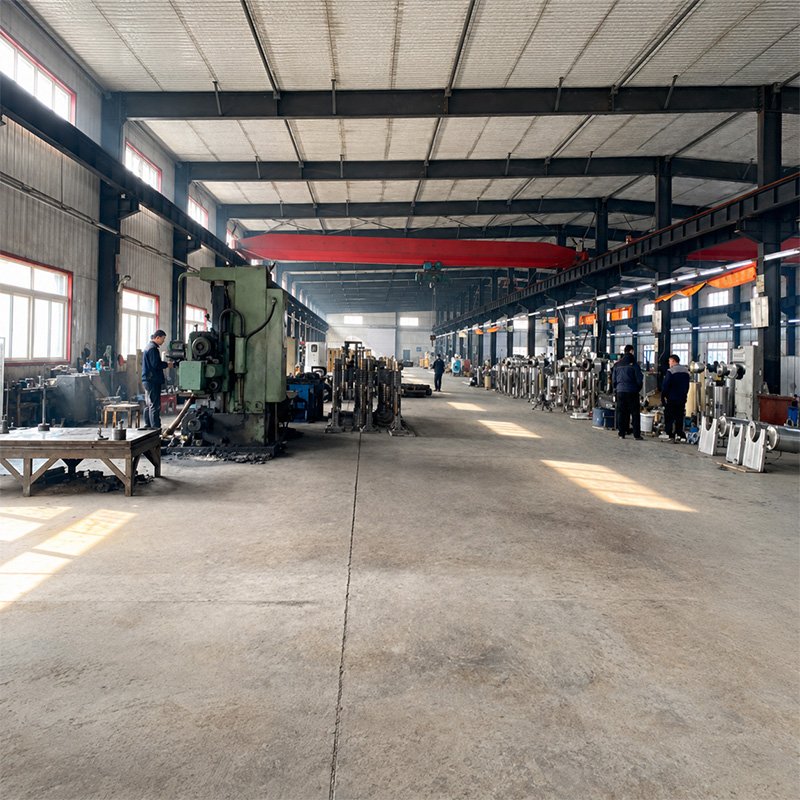


After the filtration configuration and technical specifications are confirmed, HiURTB follows the project through filtration equipment manufacturing, inspection, factory testing, delivery and after-sales service.
System & Interface Confirmation
HiURTB confirms the tanks, pumps, filters, piping, instruments, controls and equipment interfaces before manufacturing begins.
Manufacturing & Quality Inspection
We follow the confirmed specifications during manufacturing and inspect key materials, components, fabrication details and equipment configuration.
Factory Acceptance Testing
HiURTB arranges equipment inspection and factory acceptance testing according to the agreed FAT scope before shipment.
Delivery & Installation Support
We coordinate equipment delivery and provide installation guidance and operator training according to the project scope.
After-Sales & Spare Parts
HiURTB provides remote technical support, maintenance assistance and replacement parts for long-term equipment operation.
Filtration Equipment Applications

Cannabis oil filtration and hemp oil filtration can remove precipitated waxes, lipids, activated carbon and filter aids from winterized cannabinoid extracts before solvent recovery or distillation.

Separate biomass, suspended solids and color-treatment media from ethanol extracts before solvent recovery and further refining.

Herbal extract filtration removes plant residues, suspended particles and precipitated solids from botanical extracts before concentration, purification or drying.

Remove selected fine particles, precipitated solids or waxy components from essential oils and resinous extracts where further clarification is required.

Natural ingredient filtration can clarify, concentrate or fractionate nutraceutical ingredients, natural actives and functional extracts using suitable conventional or membrane filtration systems.

Recover crystals and precipitated solids through closed filtration, cake washing and optional vacuum drying after crystallization.
More About Our Filtration Equipment
- Filtration Equipment Types & Applications
- Representative Specifications – Stainless Steel Plate-and-Frame Filters
- Common Configuration – Stainless Steel Plate-and-Frame Filters
Available equipment and system components are selected according to the material, solvent, solids loading, particle size, batch volume, operating temperature and separation target. Final equipment configuration and specifications are confirmed after process review or material testing.
| No. | Equipment Category | Available Equipment / Typical System Components | Typical Applications |
| 1 | Vacuum Filtration Equipment | Laboratory Vacuum Filters Büchner Filtration Systems Stainless Steel Vacuum Filters Jacketed Vacuum Filters Closed Vacuum Filtration Systems | Laboratory testing and process validation; winterized extract filtration; wax and precipitate removal; activated carbon and filter-aid removal. |
| 2 | Pressure & Plate Filtration Equipment | Plate and Frame Filters Enclosed Plate Filters Chamber Filter Presses Membrane Filter Presses | Medium-to-large-batch botanical extract filtration; winterization filtration; high-solids feed processing; activated carbon, diatomaceous earth and filter-aid removal; filter cake formation and recovery. |
| 3 | Bag & Cartridge Filtration Systems | Single and Multi-Bag Filters Duplex Bag Filters Single and Multi-Cartridge Housings High-Flow Cartridge Systems Sanitary Cartridge Filters | Coarse removal of plant residues; high-solids pre-filtration; downstream equipment protection; liquid clarification and final polishing. |
| 4 | Depth & Lenticular Filtration Systems | Depth Sheet Filters Lenticular Filter Housings Stacked-Disc Filters Enclosed Depth Filtration Skids | Cannabis oil and botanical extract clarification; fine-particle retention; activated carbon and filter-aid removal; filtration before distillation. |
| 5 | Closed Solid-Liquid Filtration Equipment | Vacuum Nutsche Filters Pressure Nutsche Filters Agitated Nutsche Filters Agitated Nutsche Filter Dryers Pressure Leaf Filters Candle Filters | Closed solid-liquid separation; solvent-containing slurry filtration; crystal and precipitate recovery; filter cake washing; combined filtration and vacuum drying where required. |
| 6 | Membrane Filtration Systems | Microfiltration Systems Ultrafiltration Systems Nanofiltration Systems Ceramic Membrane Systems Polymeric Membrane Systems Crossflow Filtration Systems | Botanical extract clarification; natural ingredient concentration; molecular-weight fractionation; continuous crossflow filtration; functional ingredient processing. |
| 7 | Centrifugal Separation Equipment | Basket Filtering Centrifuges Peeler Centrifuges Decanter Centrifuges Disc-Stack Separators Ethanol Extraction Centrifuges | Biomass separation after ethanol extraction; high-solids feed separation; crystal and precipitate recovery; continuous liquid clarification; solids reduction before downstream filtration. |
| 8 | Integrated Filtration Skids | Feed Tank Transfer Pump Pre-Filter Main Filtration Unit Polishing Filter Receiving Tank Piping and Instruments Control System | New extraction and post-processing lines; existing filtration system expansion; winterization filtration debottlenecking; closed solvent filtration; Integrated matching of tanks, pumps, filters and receiving equipment. |
| Reference Configuration | Filter Layers | Filtration Area | Plate Size | Available Filtration Grade | Reference Flow Rate | Feed Pump Power | Overall Dimensions |
| PF-R100-10 | 10 | 0.078 m² | Ø100 mm | 0.22–100 μm | 0.8 t/h | 0.37 kW | 600 × 300 × 600 mm |
| PF-R150-10 | 10 | 0.17 m² | Ø150 mm | 0.22–100 μm | 1.5 t/h | 0.55 kW | 650 × 380 × 650 mm |
| PF-R200-10 | 10 | 0.34 m² | Ø200 mm | 0.22–100 μm | 2 t/h | 0.75 kW | 650 × 400 × 700 mm |
| PF-R300-10 | 10 | 0.7 m² | Ø300 mm | 0.22–100 μm | 4 t/h | 0.75 kW | 700 × 500 × 800 mm |
| PF-R400-16 | 16 | 2 m² | Ø400 mm | 0.22–100 μm | 9 t/h | 1.5 kW | 1,000 × 600 × 1,000 mm |
| PF-S400-44 | 44 | 7 m² | 400 × 400 mm | 0.22–100 μm | 23 t/h | 1.5 kW | 1,350 × 600 × 1,000 mm |
The available filtration grade depends on the selected filter cloth, filter paper, clarification pad or membrane. Reference flow rates are based on the manufacturer’s standard conditions, but the test medium and filtration grade are not specified. Actual capacity depends on feed viscosity, temperature, solids loading, filter media, filtration grade and cake formation. Final specifications are confirmed after process review or material testing.
| Item | Available Configuration |
| Product-Contact Material | SUS304 or SUS316L stainless steel |
| Standard Working Pressure | 0.3 MPa |
| Filter Plate Options | Stainless steel or polypropylene |
| Seal Options | Silicone rubber or fluororubber |
| Filter Media | Filter cloth, filter paper, filter membrane or clarification pad |
| Pressing Method | Screw, manual hydraulic or optional automatic hydraulic |
| Connection | Quick-disassembly sanitary connection available |
| Filtration Mode | Single-stage or multi-stage filtration |
| Typical Applications | Clarification, activated carbon removal, filter-aid removal and fine filtration |
Plant extract filtration may use different types of industrial liquid filtration systems, including vacuum filters, filter presses, bag filters, cartridge filters, depth filters, membrane systems and centrifuges.
The right equipment depends on the material, solids loading, filtration target and production scale.
Select filtration equipment according to the material and separation target. You should also consider the solvent, viscosity, solids loading, particle size, operating temperature and required capacity.
To size filtration equipment, we need the batch volume or required flow rate. We also review the viscosity, temperature, solids loading, particle size, filtration grade and operating mode.
Filtration equipment capacity depends on the actual feed conditions. High viscosity, low temperature, fine particles and high solids loading can reduce the filtration rate. Filter media, filtration area and operating pressure also affect capacity.
Bag filtration equipment is commonly used for coarse particles and higher solids loading. Cartridge filters are better suited to finer clarification, downstream equipment protection and final polishing. The two stages can be combined in one system.
Lenticular and depth filtration equipment is suitable for fine-particle retention and extract clarification. It can also remove activated carbon and selected filter aids. High-solids liquids may require pre-filtration first.
Yes. Cannabis filtration equipment can separate waxes and lipids after they have been properly precipitated at a suitable temperature.
During CBD oil filtration, the chilled extract may pass through one or more filtration stages according to the solids loading and required clarity.
Solvent filtration equipment requires compatible contact materials, seals and filter media. Closed transfer, grounding, electrical requirements and installation-area conditions must also be reviewed for each project.
Vacuum filtration equipment is commonly used for laboratory, pilot and batch processing. Pressure filtration provides a higher pressure difference and can support larger filtration areas, higher solids loading and filter cake formation.
Yes. HiURTB can integrate filtration equipment with existing tanks, pumps, piping, instruments, controls and downstream machines. We review the capacity, interfaces, material-transfer method and available installation space before confirming the configuration.
How to Select Filtration Equipment for Extraction & Post-Processing
Selecting the right system starts with the material and the required separation result. Capacity alone is not enough. The following steps help define suitable filtration stages, filter media, equipment size and system connections.
Define the Separation Target
Start by defining what must be removed or recovered. Different targets require different filtration equipment, filter media and operating conditions.
| Separation Target | Process Condition | Typical Filtration Approach |
| Plant Fibers | Large fibers and plant residues remain after botanical or ethanol extraction. | Use screens, centrifuges or bag filters for coarse separation before fine filtration. |
| Suspended Particles | Fine solids make the extract cloudy and may create deposits downstream. | Use bag, cartridge, plate, depth or lenticular filters according to particle size and solids loading. |
| Waxes and Lipids | Waxes and lipids precipitate after controlled cooling during winterization. | Keep the extract cold and use suitable vacuum, pressure, plate or depth filtration. |
| Activated Carbon and Filter Aids | Activated carbon, diatomaceous earth or other processing media remain after treatment. | Use plate, depth or lenticular filters with suitable retention and dirt-holding capacity. |
| Precipitates | Solids form after cooling, pH adjustment, solvent change or another process step. | Select the filter according to particle size, solids concentration and cake behavior. |
| Crystals | Crystals are normally valuable products that must be recovered without excessive damage. | Use a centrifuge, Nutsche filter or another closed solid-recovery system with optional cake washing. |
| Microorganisms or Very Fine Particles | The process requires microbial reduction or very fine particle retention. | Review suitable membranes, sanitary housings, operating procedures and validation requirements. |
Also define the required result:
- Coarse solid-liquid separation
- Liquid clarification
- Fine filtration
- Final polishing
- Concentration
- Molecular-weight fractionation
- Crystal or precipitate recovery
Standard particle filters do not automatically provide sterile filtration. Microbial control requires a defined retention target and suitable validation.
Decide Whether to Keep the Filtrate or Filter Cake
Before selecting filtration equipment, confirm which part of the material must be recovered. The valuable product may be the filtered liquid, the retained solids or both.
Keep the Filtrate
The filtrate is the liquid that passes through the filter media. In winterization filtration, the valuable cannabinoid extract normally remains in the liquid. The precipitated waxes and lipids are removed.
When the filtrate is valuable, the system should support complete drainage, low product hold-up and practical transfer to the receiving tank.
Keep the Filter Cake
The filter cake contains the solids retained on the filter media. In crystallization, the cake may contain the valuable crystals.
When the filter cake is valuable, review:
- Cake formation and thickness
- Crystal damage
- Cake washing
- Residual liquid or solvent
- Cake discharge
- Transfer to the drying equipment
Recover Both Phases
Some processes require both the filtrate and the filter cake. The two products may need separate receiving systems. The discharge and cleaning procedures should prevent cross-contamination.
The required product determines the filter media, cake-handling method, drainage design and product-recovery arrangement.
Review the Feed Properties
The same filtration equipment can provide very different flow rates with different materials. Review the actual feed conditions before selecting the filter type and size.
Material Composition
Identify the material, extract type and current process stage. Define the particles, waxes, processing media, precipitates or crystals that must be removed.
Solvent
Confirm whether the feed contains ethanol, water, oil, hydrocarbons or another solvent. The solvent affects contact materials, seals, filter media and safety requirements.
Temperature
Temperature affects viscosity and filtration speed. It can also affect wax precipitation and product stability.
Winterized extracts may need insulated piping or jacketed equipment. This helps keep the material cold during filtration.
Viscosity
High-viscosity liquids pass through filter media more slowly. Heating may reduce viscosity in some processes. The material and solvent must tolerate the selected temperature.
Solids Loading
A high-solids feed can block a fine filter quickly. It may require coarse separation, more filtration area or equipment designed for cake formation.
Particle Size and Distribution
Large particles are usually easier to remove. Fine, soft or compressible particles can enter the filter media and cause rapid blockage.
Provide a particle-size range when possible. One average particle size may not describe the complete feed.
Waxiness or Stickiness
Waxy or sticky solids may form a dense cake. This can reduce permeability and filtration speed.
Product Sensitivity
Some products are sensitive to heat, oxygen, light or shear. They may require low-temperature processing, closed transfer or a gentler pump.
If exact information is unavailable, provide photographs, samples or previous test results. Pilot testing may be required when filtration behavior is uncertain.
Confirm Batch or Continuous Operation
The operating mode affects the structure, controls and capacity of filtration equipment. It also affects labor, cleaning and product changeover.
| Consideration | Batch Filtration | Continuous Separation |
| Production Pattern | Separate production batches | Stable or continuous feed |
| Typical Scale | Laboratory, pilot and industrial batch processing | Medium-to-large continuous production |
| Material Changes | Suitable for multiple materials or recipes | Best for stable feed conditions |
| Cake Handling | Suitable for cake formation, washing and batch discharge | Depends on the selected continuous separator |
| Cleaning | Cleaned between batches or product changes | Cleaning may require planned production stops |
| Capacity Calculation | Based on the full filtration, drainage, discharge and cleaning cycle | Based on continuous flow, operating hours and cleaning intervals |
| Typical Equipment | Vacuum filters, filter presses and Nutsche filters | Decanter centrifuges, disc-stack separators and crossflow membrane systems |
Batch filtration is often more practical for winterization, crystal recovery and changing products. Continuous separation is useful when the feed is stable and daily throughput is high.
The final choice should also consider operator availability, cleaning frequency and the production rates of upstream and downstream equipment.
Compare Filtration Equipment Types
This section compares the main filtration equipment by selection logic. This comparison helps you match the equipment type with your material, separation target and operating conditions.
| Equipment Type | Best Suited For | Main Advantages | Main Considerations |
| Vacuum Filtration | Laboratory testing, pilot production, winterization and batch clarification | Simple batch operation; visible cake formation; suitable for small-to-medium batches | Capacity may be limited with viscous liquids, fine particles or dense cakes |
| Pressure and Plate Filtration | Medium-to-large batches, higher solids loading and filter cake recovery | Larger filtration area; higher pressure difference; suitable for filter-aid removal | Requires cake discharge, cleaning and plate or cloth maintenance |
| Bag Filtration | Coarse particles, plant residues and pre-filtration | Simple structure; high dirt capacity; easy media replacement | Not normally selected for very fine final filtration |
| Cartridge Filtration | Clarification, downstream protection and final polishing | Available in different grades; compact housing; suitable for staged filtration | Fine cartridges can block quickly if the feed contains high solids |
| Depth and Lenticular Filtration | Fine particles, activated carbon, filter aids and high-clarity extracts | High dirt-holding capacity; enclosed operation; good clarification performance | Media adsorption, replacement cost and pre-filtration requirements should be reviewed |
| Closed Solid-Liquid Filtration | Solvent-containing slurries, precipitates, crystals and filter cake washing | Closed transfer; controlled cake handling; optional washing, agitation or drying | More complex equipment; final configuration depends on cake and solvent behavior |
| Membrane Filtration | Clarification, concentration and molecular-weight fractionation | Selective separation; possible continuous crossflow operation; concentration without evaporation | Membrane fouling, cleaning, compatibility and feed testing are important |
| Centrifugal Separation | Biomass, high solids loading, precipitates and crystals | Rapid bulk separation; suitable for high-solids feed; continuous options available | Fine polishing may still be required; shear and crystal damage should be reviewed |
| Integrated Filtration Skids | New processing lines, capacity upgrades and multi-stage filtration | Tanks, pumps, filters, piping, instruments and controls can be matched as one system | Requires clear process data, interface confirmation, layout and utility review |
The best system may combine several technologies. For example, a bag filter can remove coarse solids before a cartridge or lenticular filter performs final clarification.
Configure the Filtration Stages
Do not always try to reach the final filtration grade in one step. Multi-stage filtration equipment separates coarse and fine particles through different filters.
A typical process is:
Coarse Filtration → Clarification → Fine Filtration → Final Polishing
| Filtration Stage | Main Function | Typical Equipment or Media | Benefit |
| Coarse Filtration | Remove plant fibers and large solids. | Screens, centrifuges, metal mesh or bag filters | Protects later filters from rapid blockage |
| Clarification | Remove suspended solids, waxes, precipitates and processing media. | Plate filters, filter presses, depth filters or lenticular filters | Improves liquid clarity and removes most remaining solids |
| Fine Filtration | Remove smaller particles before sensitive downstream equipment. | Fine cartridges, depth media or selected membranes | Protects solvent recovery, distillation and membrane systems |
| Final Polishing | Achieve the final clarity or particle-retention requirement. | Polishing cartridges or suitable membrane filters | Supports final product quality and downstream requirements |
The stages can be combined in a multi-stage filtration system on one skid or operated as separate batch steps.
A well-designed multi-stage process can:
- Reduce rapid clogging
- Maintain a more stable flow
- Extend fine-filter service life
- Reduce consumable use
- Protect downstream equipment
- Improve final liquid clarity
Not every process needs all four stages. Low-solids liquids may only require clarification and polishing.
Select Filter Media, Grade and Consumables
Selecting filtration equipment also requires suitable filter media. Micron rating is only one part of the decision.
| Filter Media / Selection Factor | Typical Use | Main Selection Considerations |
| Filter Cloth | Plate filters, filter presses and Nutsche filters | Material, weave, permeability, cake release and cleaning |
| Filter Bag | Coarse and intermediate filtration | Micron rating, dirt capacity, solvent compatibility and replacement frequency |
| Filter Cartridge | Clarification, equipment protection and final polishing | Nominal or absolute rating, flow, pressure drop and solids loading |
| Depth Sheet | Fine-particle retention and processing-media removal | Dirt-holding capacity, adsorption and product loss |
| Lenticular Module | Enclosed depth filtration | Module size, filter area, compatibility and replacement cost |
| Metal Mesh | Screens, reusable pre-filters and media supports | Opening size, strength and cleaning method |
| Polymeric Membrane | Microfiltration, ultrafiltration and nanofiltration | Solvent compatibility, temperature, fouling and cleaning chemicals |
| Ceramic Membrane | Crossflow clarification and concentration | Pore size, chemical resistance, temperature and cleaning procedure |
| Product Adsorption | High-value extracts may remain in the media. | Compare product loss with the required clarity |
| Replacement Frequency | Media replacement affects downtime and operating cost. | Review solids loading, filter area and batch frequency |
| Standard or Customized Size | Standard media are generally easier to source. | Confirm future availability, lead time and minimum order quantity |
| Local Availability and Cost | Consumables are a recurring operating expense. | Calculate media, labor, cleaning, disposal and product-loss costs |
The finest filter is not always the best option. An unnecessarily fine grade may reduce flow and increase operating cost without improving the required product result.
Evaluate Actual Filtration Capacity
Do not select filtration equipment from a nominal flow rate alone. Nominal flow is often measured with clean water or another low-viscosity liquid. Real extracts and slurries may flow much more slowly.
Actual capacity depends on several connected factors:
- Feed viscosity and temperature
- Solids loading
- Particle size and structure
- Filtration area
- Filter media permeability
- Operating pressure or vacuum
- Filter cake formation
- Cleaning frequency
- Media replacement time
- Effective operating hours
Viscosity and Temperature
Cold or viscous liquids pass through filter media more slowly. Winterized extracts may require more filtration area because the liquid must remain cold.
Solids Loading and Cake Formation
High solids loading creates a filter cake more quickly. A porous cake may continue filtering well. A dense, waxy or compressible cake can cause the flow to fall rapidly.
Filtration Area and Filter Media
A larger filtration area can increase capacity and reduce the loading on each section of media. Media permeability, pore structure and dirt-holding capacity also affect flow.
Two filter media with the same micron rating may perform differently.
Pressure or Vacuum
A suitable pressure difference moves the liquid through the filter. Excessive pressure may compress the cake and reduce its permeability. It may also damage sensitive filter media or products.
Complete Batch Cycle
Capacity calculations should include more than filtration time:
- Material transfer and filling
- Filtration
- Drainage
- Cake discharge
- Filter media replacement
- Cleaning
- Preparation for the next batch
Where possible, provide previous test data. Useful information includes filter area, feed temperature, media type, batch volume, filtration time and solids collected.
Material testing gives a more reliable sizing basis than a theoretical flow rate.
Review Product Loss, Cleaning and Sanitary Requirements
Good filtration equipment should separate the target material without creating unnecessary product loss or difficult cleaning work.
Product Retained in Filter Media
Filter cloths, cartridges and depth media can retain valuable product. This loss may be important when processing concentrated or high-value extracts.
The filter media should provide the required clarity without excessive adsorption or hold-up.
Liquid Trapped in the Filter Cake
The filter cake may contain valuable liquid. Displacement, gas blowing or cake washing can recover part of this liquid when the process allows it.
The selected method must be compatible with the product and solvent.
Housing and Piping Hold-Up
Product can remain inside filter housings, valves, hoses and pipes. Shorter transfer paths, suitable pipe slopes and correctly positioned drains can reduce this loss.
The system should drain without excessive dismantling.
Filter Replacement and Cleaning
Operators need practical access to filter bags, cartridges, sheets and cloths. Heavy components may require lifting assistance.
Small systems may use manual cleaning. Larger systems may require CIP connections, spray devices or cleaning circulation.
Sanitary Design
Food, nutraceutical and natural ingredient applications may require:
- Sanitary product-contact surfaces
- Suitable internal welds
- Hygienic pipe connections
- Drainable equipment
- Reduced dead legs
- Compatible cleaning chemicals
The required sanitary standard should be confirmed before manufacturing.
Cross-Contamination
Shared equipment may retain material from the previous batch. Sensitive products may require validated cleaning procedures, dedicated filter media or separate product-contact components.
Product recovery, cleaning time and batch changeover can significantly affect the real operating cost.
Confirm Solvent, Material and Safety Requirements
Filtration equipment used with ethanol or another solvent requires a project-specific review. Confirm the solvent, operating conditions, installation area and local requirements before finalizing the system.
Wetted-Part Materials
The product-contact material must be compatible with:
- The process liquid
- The solvent
- The operating temperature
- Cleaning chemicals
- Sanitary requirements
Stainless steel is commonly used, but the required grade depends on the application.
Seal Materials
Seal materials may include PTFE, EPDM, FKM or other compounds. A seal that works with one solvent may not be suitable for another.
The operating temperature and cleaning chemicals must also be considered.
Filter Media Compatibility
The filter media must remain stable during operation. It should not swell, soften, dissolve, lose strength or release unwanted substances into the product.
Closed Material Transfer
Ethanol and other volatile solvents may require closed feed, filtration and receiving arrangements. The piping, filter housing and receiving tank should be reviewed as one transfer system.
Operating Pressure and Temperature
Confirm:
- Maximum operating pressure
- Required vacuum level
- Minimum and maximum temperatures
- Equipment design rating
- Pressure or vacuum protection
- Safe drainage and pressure release
Grounding and Bonding
Conductive equipment and transfer components may require grounding and bonding. This is especially important when flammable liquids or vapors are present.
Electrical and Area Classification
Motors, instruments, controls and electrical enclosures must suit the installation area. Requirements vary according to the solvent, ventilation, room classification and local regulations.
Local Safety Requirements
The customer should confirm applicable requirements for:
- Ventilation
- Fire protection
- Solvent storage
- Building layout
- Electrical classification
- Operator procedures
- Local inspection or certification
A standard machine should not be assumed to meet every solvent-area requirement. The final material, electrical and safety configuration must be confirmed for each project.
Integrate With Upstream and Downstream Equipment
Filtration equipment should match the complete process rather than operate as an isolated machine.
| Connected Equipment | Interface Information to Confirm |
| Feed or Winterization Tank | Tank volume, outlet position, agitation, temperature and jacket requirements |
| Transfer Pump | Flow, pressure, viscosity, solids handling, solvent compatibility and product sensitivity |
| Solvent Extraction Equipment | Extract outlet, transfer method, solids loading and need for coarse separation |
| Solvent Recovery System | Required pre-filtration grade, flow rate and receiving arrangement |
| Receiving Tank | Volume, closed transfer, agitation, temperature control and drainage |
| Distillation Equipment | Maximum allowable particles, feed rate and transfer temperature |
| Membrane System | Required pre-filtration, solids limit and protection against rapid fouling |
| Crystallization Equipment | Slurry discharge, crystal size, washing requirements and batch volume |
| Drying Equipment | Cake discharge, transfer method and acceptable moisture or solvent content |
| Piping and Valves | Size, connection standard, material, pressure rating and drainage |
| Instruments and Controls | Pressure, temperature, flow, level, alarms and control signals |
Also confirm:
- Gravity or pumped transfer
- Connection sizes and standards
- Upstream and downstream capacities
- Required batch cycle time
- Available installation space
- Electrical power
- Heating and cooling utilities
- Compressed air or inert gas
- Future capacity expansion
Correct interface confirmation can reduce on-site modifications and improve the operation of the complete line.
Information to Send Before Quotation
To recommend suitable filtration equipment and evaluate actual capacity, please provide the following material and process information.
| Information Required | What to Provide |
| Material or Product | Material name, extract type and current process stage |
| Solvent | Solvent type and approximate concentration |
| Batch Volume or Flow Rate | Volume per batch or required hourly flow |
| Operating Temperature | Feed and expected filtration temperature |
| Viscosity | Known value or a description of the liquid consistency |
| Solids Loading | Approximate percentage or known solids content |
| Particle Size | Known particle range or description of the solids |
| Required Filtration Grade | Target micron rating, clarity or downstream requirement |
| Product to Be Recovered | Filtrate, filter cake or both |
| Operating Mode | Batch or continuous operation |
| Connected Equipment | Upstream and downstream equipment |
| Cleaning Requirements | Manual cleaning, CIP and sanitary requirements |
| Installation Information | Installation area, available space and area-classification requirements |
| Electrical & Utilities | Voltage, frequency, phase, compressed air, heating, cooling and other available utilities |
Send us the available information even if some values are not yet confirmed.
HiURTB will review the appropriate filtration technology, equipment capacity, filter media and system interfaces.
We will also identify any information that requires further confirmation or material testing before finalizing the configuration.

