
Why Choose HiURTB Crystallization Equipment
- Feed- and Production-Specific System Configuration
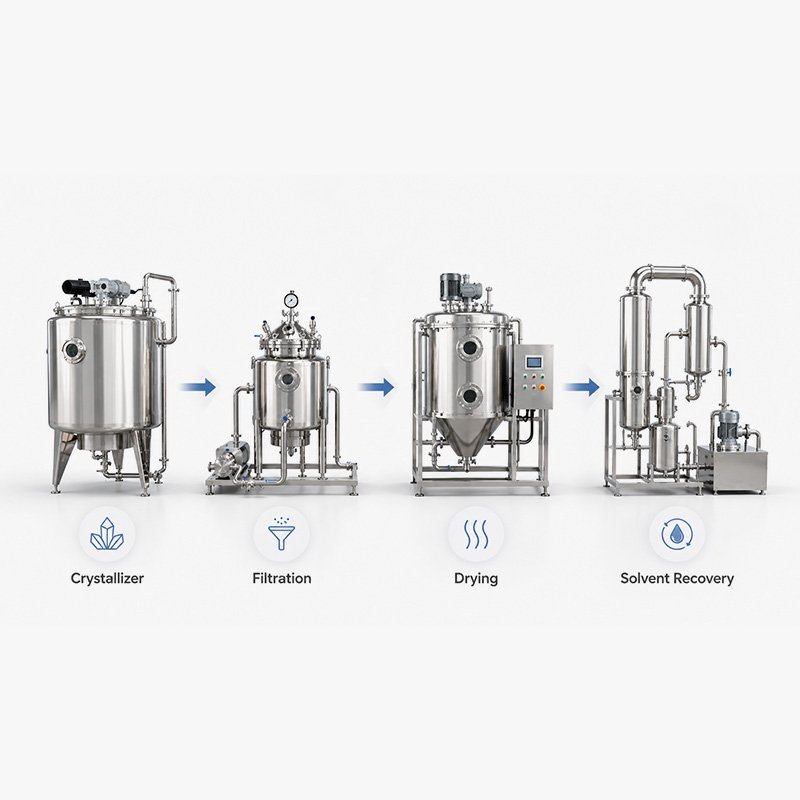
- Coordinated Crystallization and Downstream Modules
- Laboratory, Pilot and Commercial-Scale Options
- Solvent-Compatible and Explosion-Protected Configurations
- FAT, Installation Support and Long-Term Technical Service
Your Professional Crystallization Equipment Manufacturer
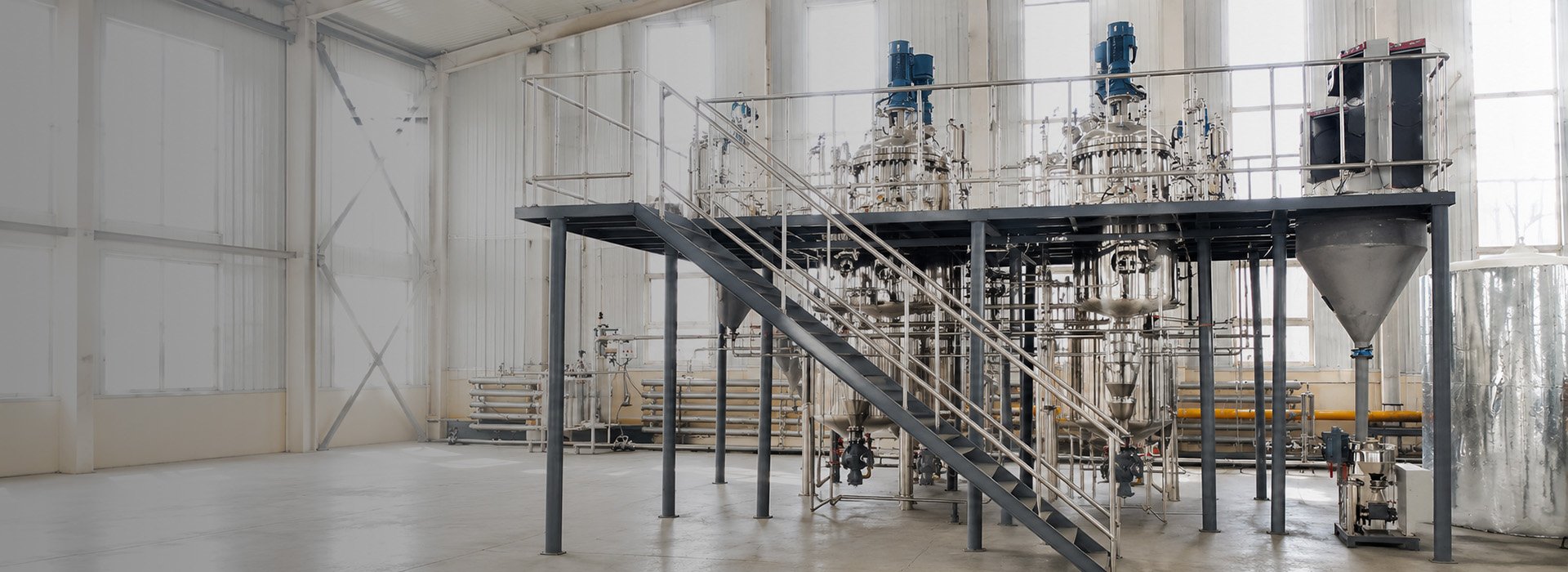
HiURTB is a crystallization equipment manufacturer and system integration partner in China. We provide laboratory, pilot and commercial-scale cannabinoid crystallization equipment for CBD isolate production, together with customized systems for selected high-value botanical compounds.
Each system is configured according to the actual feed and production target. Before confirming the equipment scope, we review the available feed composition and process data, batch input, target product and purity, selected solvent, daily operating hours, existing upstream and downstream equipment, site layout and utility conditions.
The crystallization equipment can be supplied as a standalone reactor package, integrated with suitable customer-owned equipment or configured as part of a complete CBD isolate production line. The final scope is confirmed according to the customer’s existing equipment and current production requirements.
From laboratory trials to commercial production, HiURTB provides suitable equipment configurations for various process development and production stages. By reviewing feed conditions, process data, equipment interfaces and production targets before manufacturing, we help reduce incorrect equipment selection, repeated post-installation modifications and commissioning adjustments.
Core Crystallization Equipment
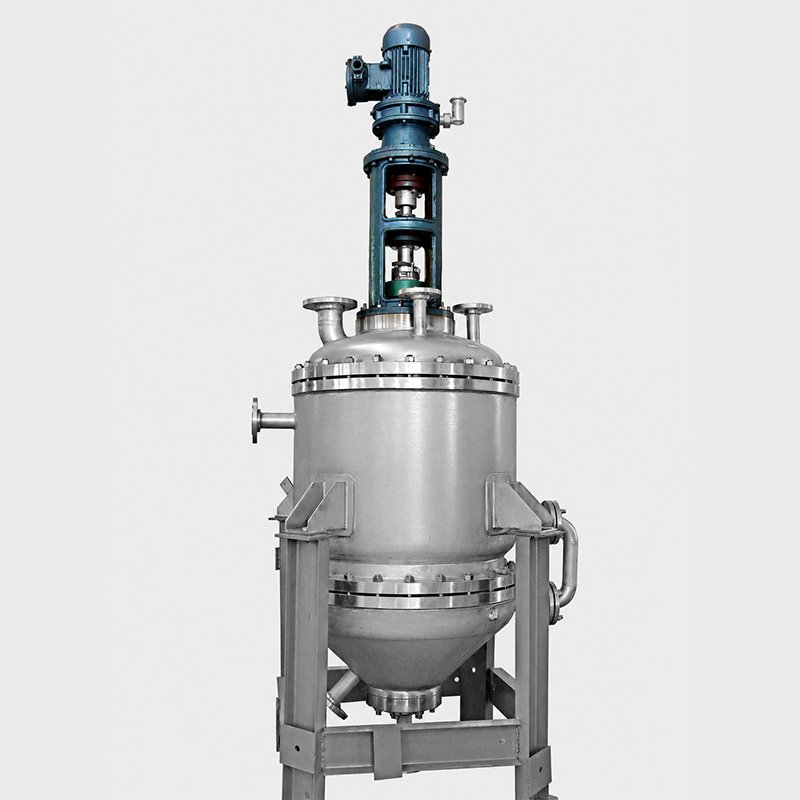
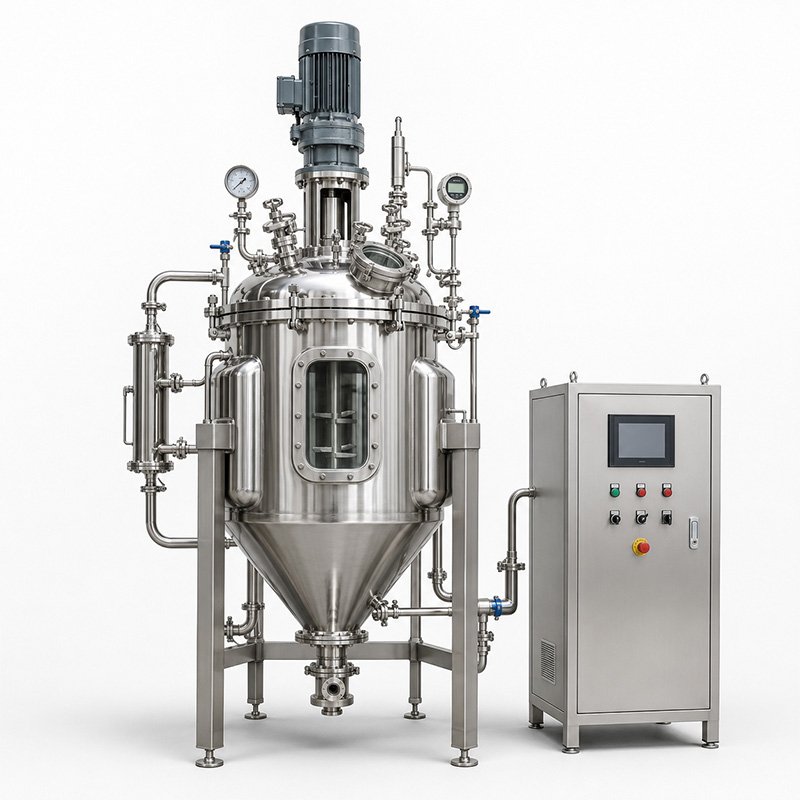 Crystallization Reactor
- Controlled dissolution, cooling, nucleation and crystal growth
- Glass, Stainless Steel SUS304 or SUS316L Construction
- Jacketed Heating and Cooling
- Variable-Speed Agitation
- Vacuum, Feeding, Sampling and Slurry Discharge Ports
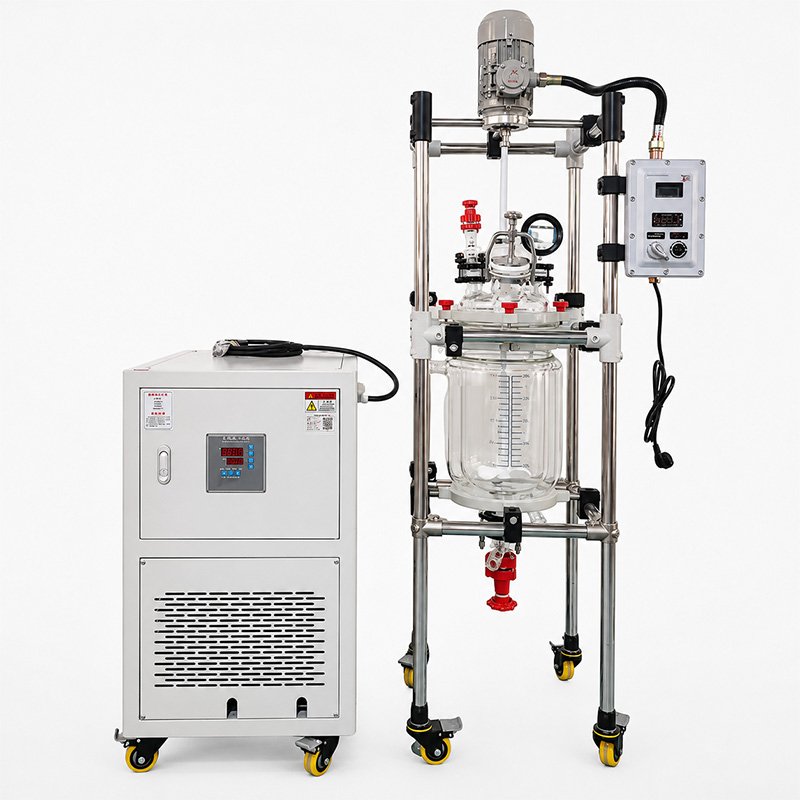 Heating and Cooling System
- Controlled Heating Circulator
- Extraction Chiller
- Programmed Cooling and Holding Profiles
- Capacity Selection at the Target Process Temperature
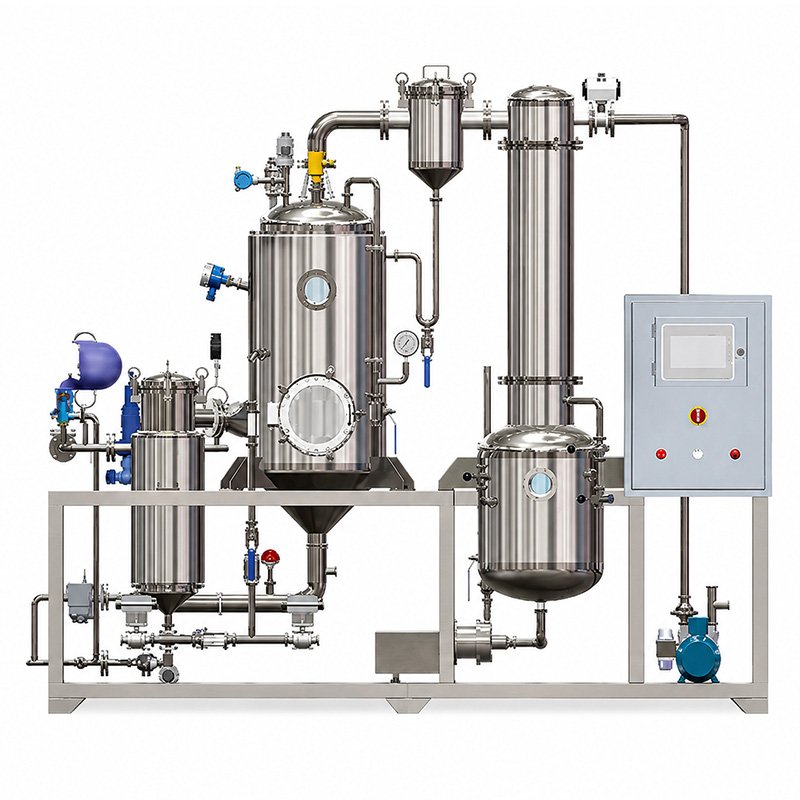 Vacuum and Condensation System
- Vacuum Pump and Control
- Cold Trap Protection
- Solvent-Vapor Condensation
- Closed Solvent Handling
Crystal Separation, Drying and Solvent Recovery Equipment
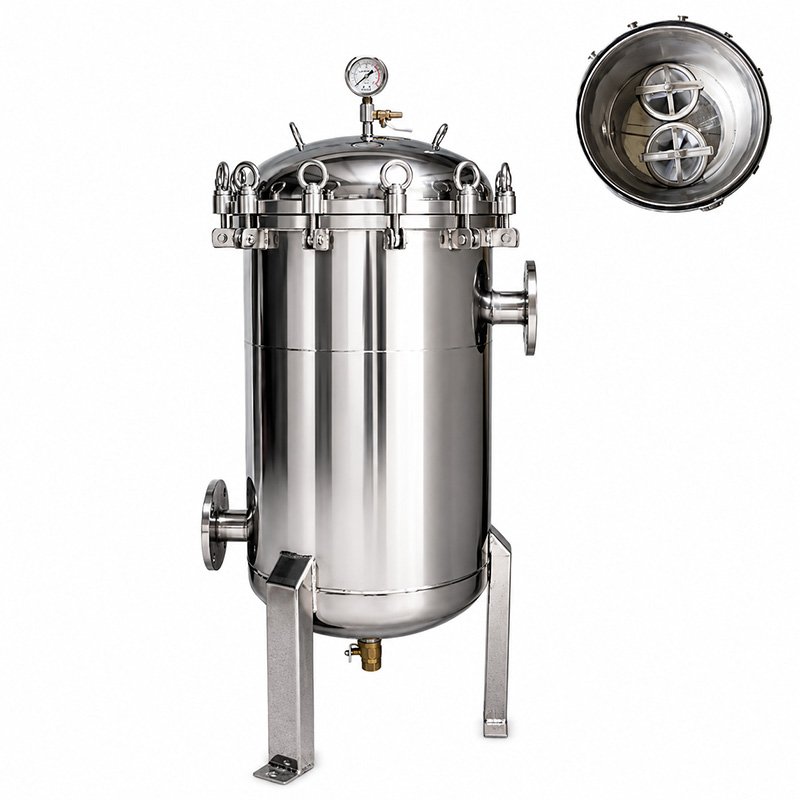 Crystallization Filtration and Washing Equipment
- Vacuum Filter, Nutsche Filter or Centrifuge
- Mother Liquor and Crystal Separation
- Controlled Crystal Washing
- Closed and Solvent-Compatible Configuration
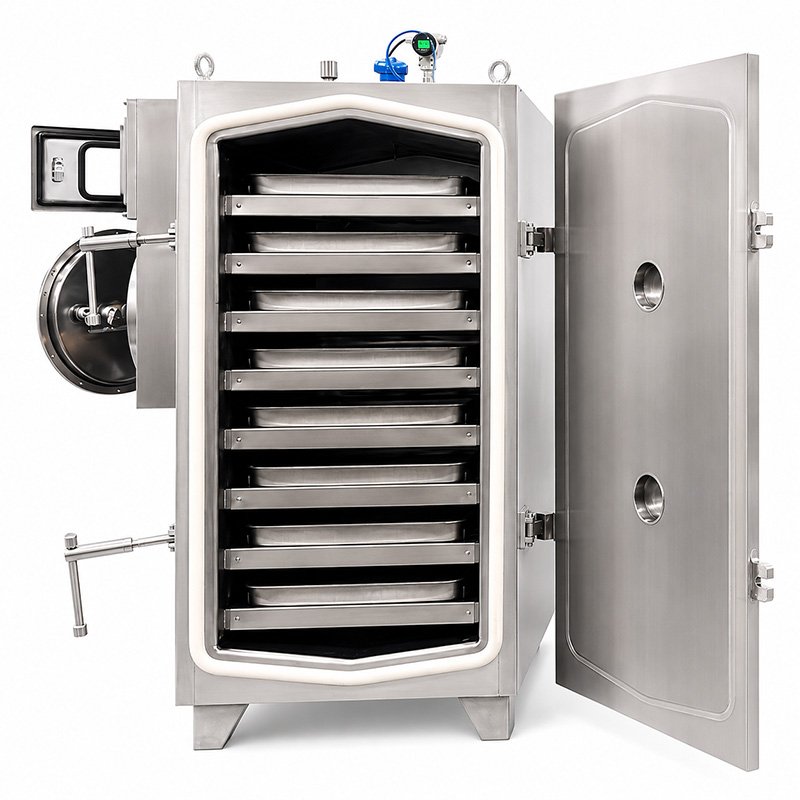 Vacuum Drying Equipment
- Vacuum Drying Oven or Tray Dryer
- Controlled Low-Temperature Drying
- Residual Solvent and Moisture Removal
- Capacity Matched to the Wet-Crystal Batch
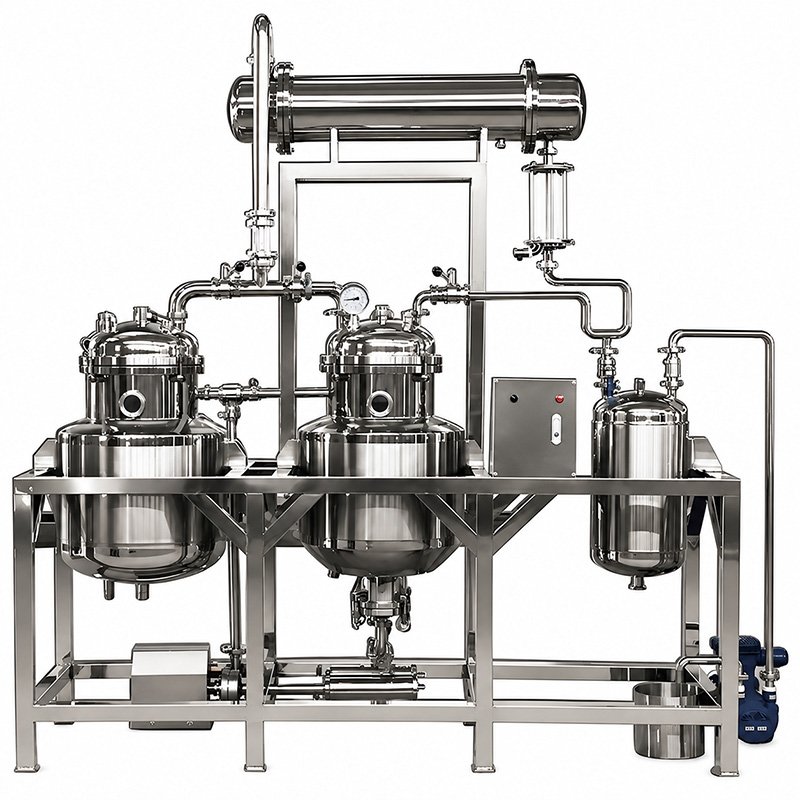 Solvent Recovery System
- Condenser and Solvent Receiving Tank
- Mother Liquor and Washing-Solvent Recovery
- Rotary Evaporator or Industrial Recovery Unit
- Recovery Capacity Matched to Solvent Load
Crystallization Control and Automation Packages
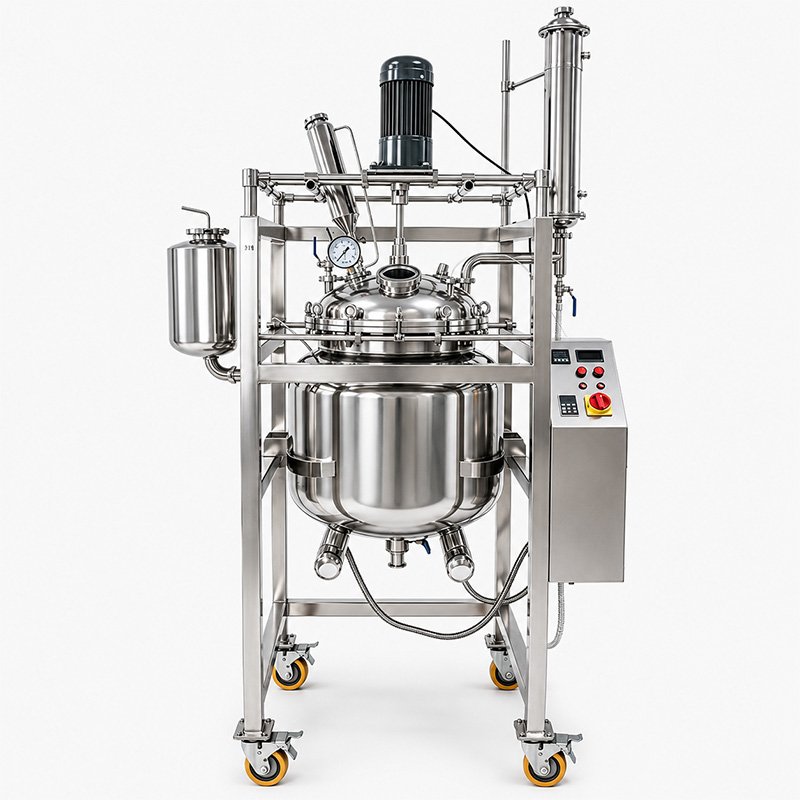 Basic Manual Control Package
- Manual Feed and Solvent Addition
- Real-Time Temperature Display
- Variable-Speed Agitation
- Manual Slurry Discharge and Operation
- For Laboratory, Pilot, And Small-Batch Crystallization
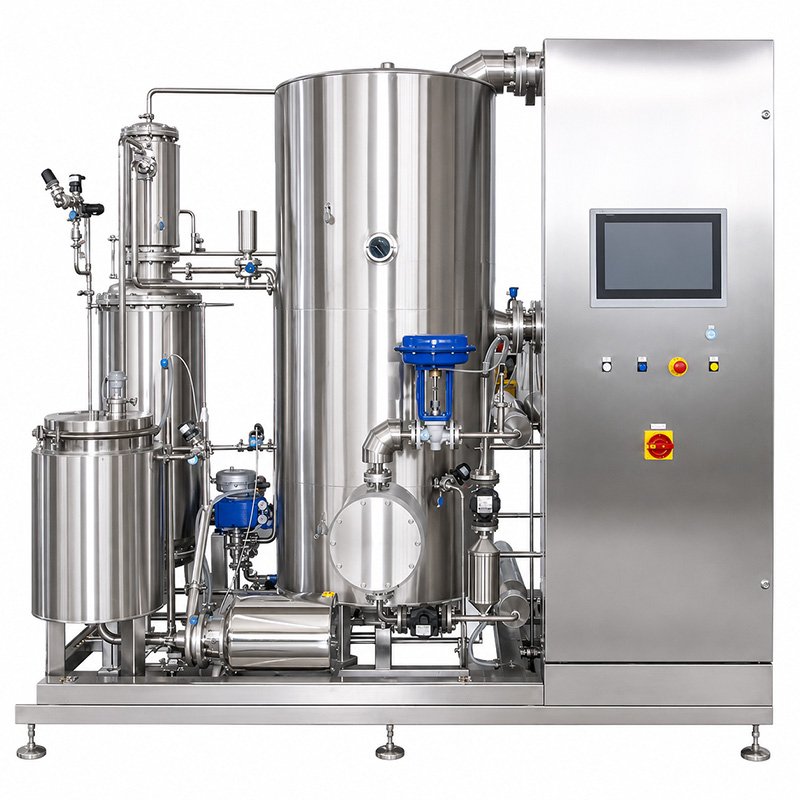 Programmed Batch Control Package
- Programmed Heating, Cooling and Holding
- Automatic Agitation-Speed Control
- Vacuum Monitoring and Alarm Functions
- Batch Recipe Storage and Repeat Execution
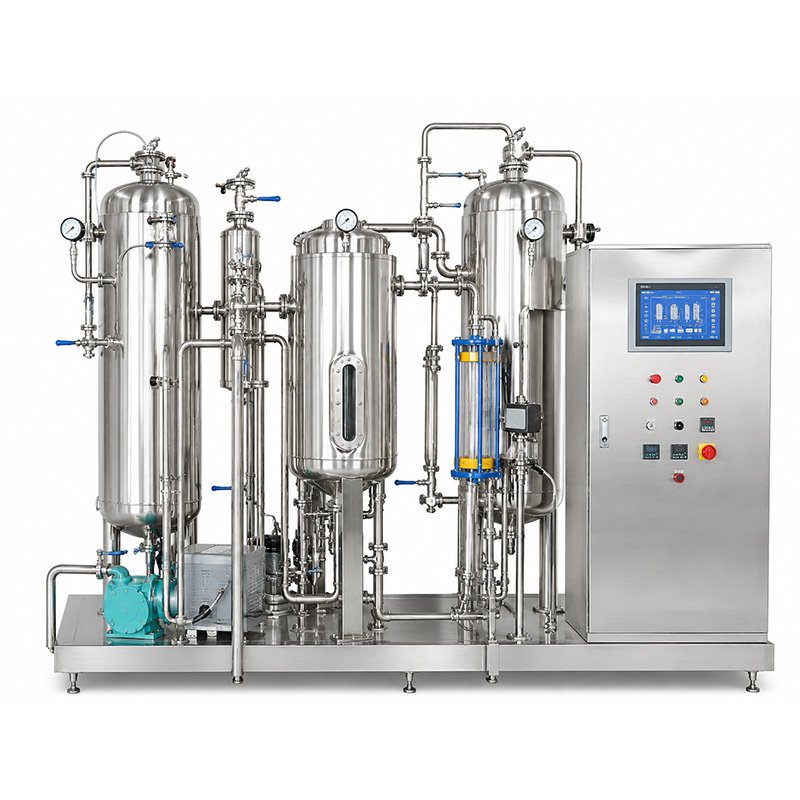 Integrated Automation and Data Management
- Automatic Feed and Solvent Metering
- Multi-Stage Temperature and Vacuum Control
- Batch Data Recording and Audit Trail
- Remote Monitoring and Module Coordination
Laboratory, Pilot and Commercial Crystallization Equipment
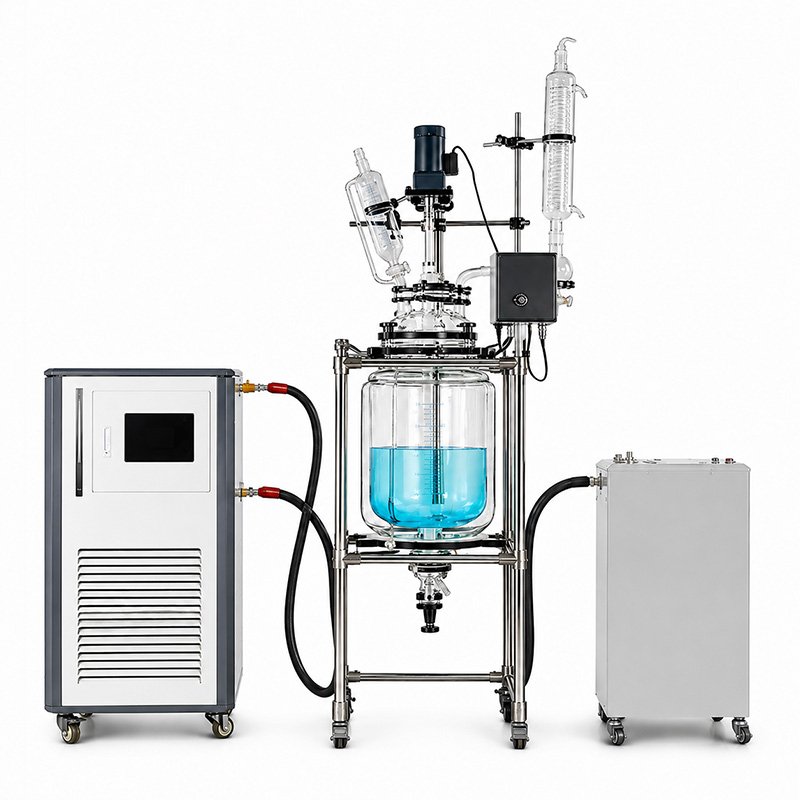 Laboratory Crystallization System
- Transparent Glass Reactor for Process Observation
- Small-Batch Solvent, Seeding and Cooling Studies
- Flexible Process Parameter Adjustment
- Sampling During Nucleation and Crystal Growth
- Process Development Before Pilot Verification
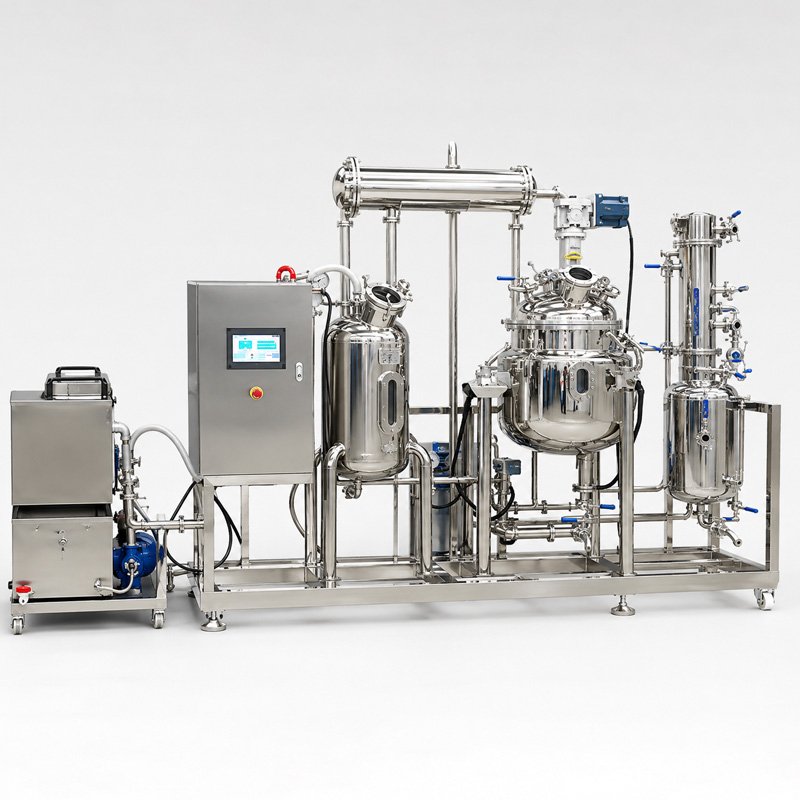 Pilot Crystallization System
- Laboratory-to-Commercial Scale-Up Verification
- Representative Batch-Cycle Testing
- Filtration, Washing and Drying Performance Evaluation
- Heat-Transfer and Agitation Scale-Up Assessment
- Process Data for Commercial Equipment Sizing
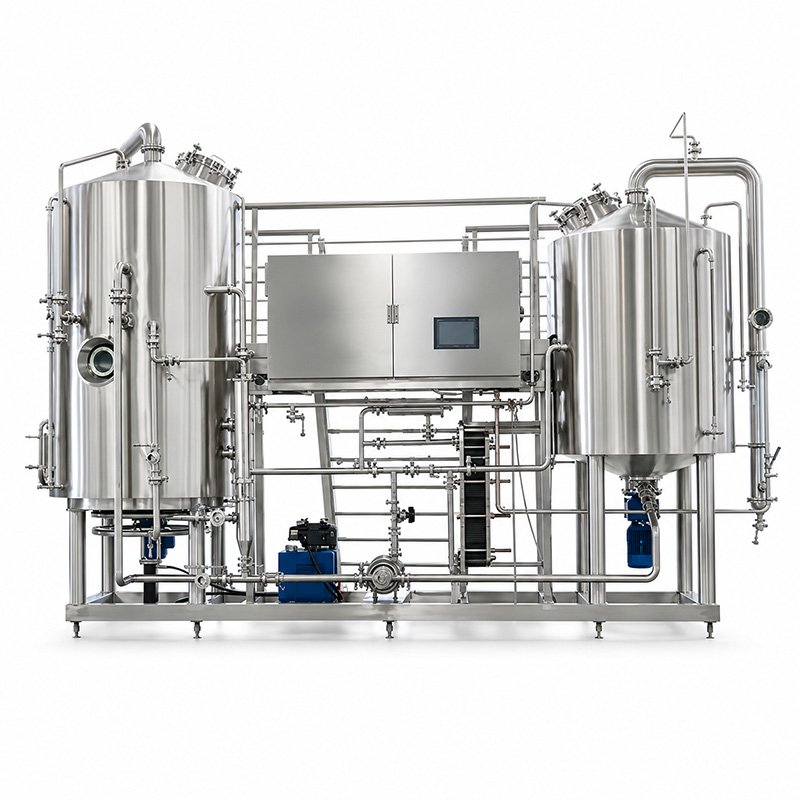 Industrial Crystallization System
- Commercial Batch Production Configuration
- Capacity Matched to Daily Output and Operating Hours
- Single- or Multi-Reactor Production Scheduling
- Coordinated Batch Transfer Between Downstream Modules
- Automation and Expansion Based on Production Requirements
Engineering Features of Our Crystallization Equipment

Programmed temperature, agitation, vacuum, and holding stages help reduce manual variation in the batch crystallization process.

Suitable agitation and slurry-discharge design help reduce crystal breakage and excessive fine particles.

Closed feeding, condensation and solvent collection help reduce vapor release and operator exposure.

Filtration, drying and recovery modules can be added or expanded as production requirements increase.
Built Around Your Feed
HiURTB reviews the available COA, feed condition, existing process and target product before configuring the reactor and downstream modules. This helps identify whether additional pretreatment, sample testing or pilot verification may be required.
You gain a clearer equipment scope, fewer unexpected process adjustments and a lower risk of purchasing equipment that is unsuitable for the actual feed.

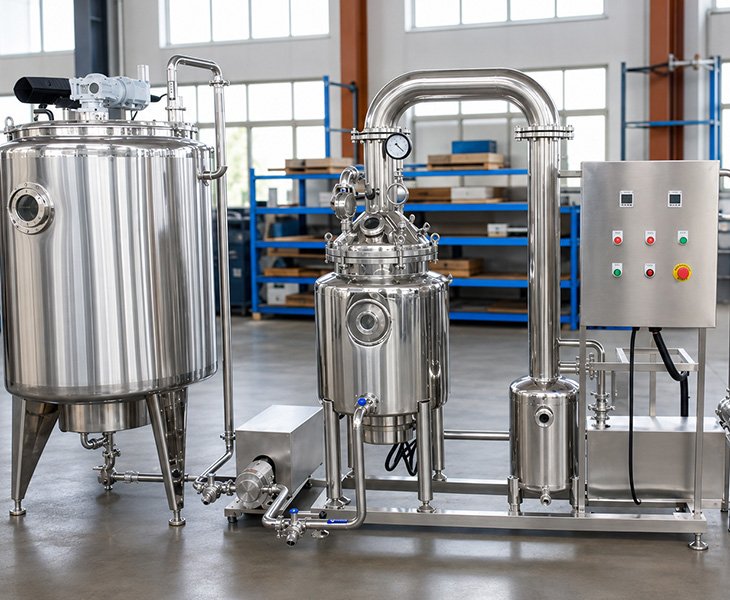
Capacity Matched to Real Output
HiURTB matches the crystallizer, cooling, filtration, drying and solvent recovery capacities to the same batch target rather than sizing each module independently.
This coordinated crystallization equipment configuration helps prevent oversized reactor investment, insufficient daily throughput and long waiting times caused by undersized downstream equipment.
You gain a production line designed around realistic batch output, operating hours and future capacity requirements.
Balance Purity, Yield & Throughput
HiURTB coordinates the cooling profile, agitation, solvent-to-feed ratio, seeding, crystal aging, filtration, washing and drying configuration around the target product specification and production cycle.
This helps reduce two common outcomes: clean-looking crystals with low recovery yield, or higher-yield batches with excessive impurity carryover and difficult filtration. Properly configured crystallization equipment supports a more practical balance between product quality, recovery yield, crystal handling and daily production throughput.
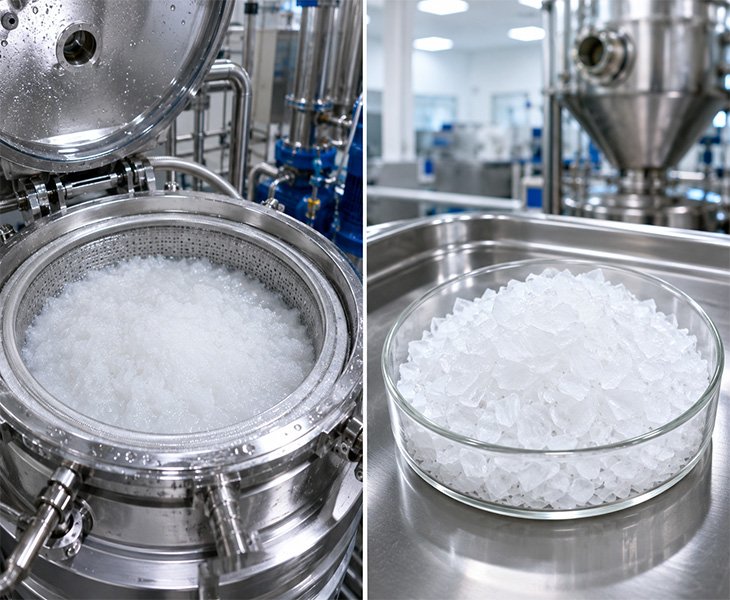
Project Delivery, FAT and After-Sales Support
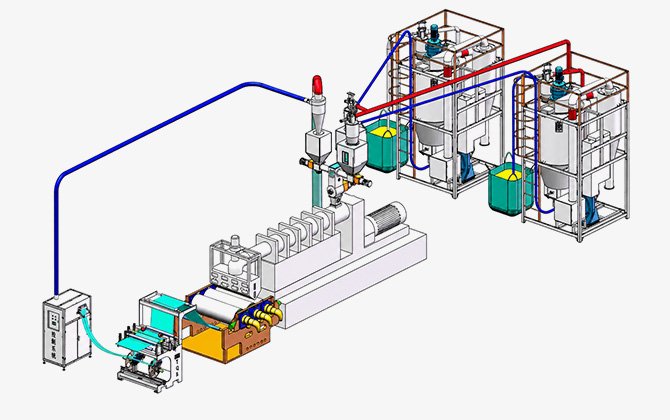
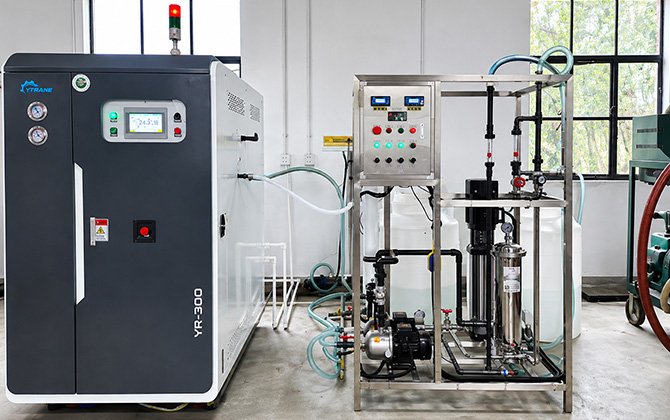
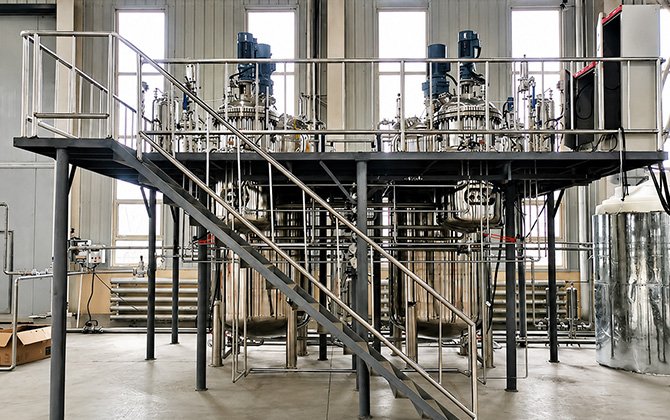
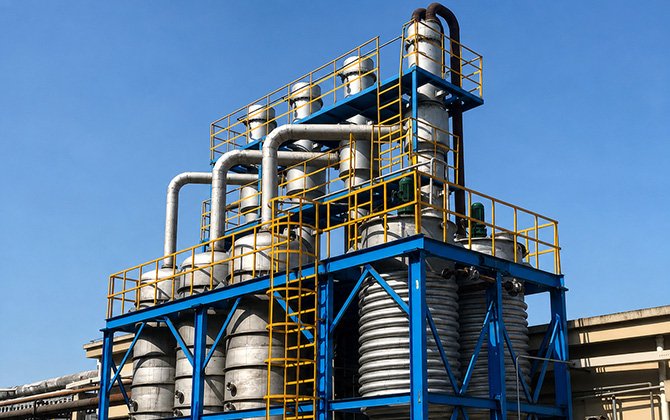
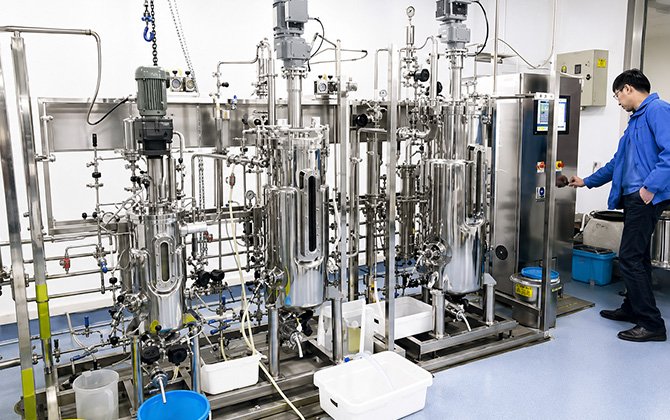
After the technical configuration is confirmed, HiURTB coordinates manufacturing, document preparation, FAT, shipment, installation support, operator training and after-sales service through one project contact.
Before production, we confirm the equipment scope, layout, utility requirements, electrical standard, control functions, connection points and responsibility boundaries. Depending on the confirmed project scope, the document package may include general arrangement drawings, utility lists, electrical diagrams, operating manuals and spare-parts information.
Before shipment, the crystallization equipment can undergo a documented Factory Acceptance Test according to the confirmed checklist. Depending on the system configuration and available factory test conditions, FAT may include visual and dimensional inspection, no-load operation, agitation direction and speed checks, control-function verification, vacuum or leakage testing, alarm and safety-interlock checks, and electrical component inspection. Photos, operating videos, and test records can also be provided for customer review.
During installation and commissioning, HiURTB can provide remote guidance or arrange on-site engineer service where required. Support may cover equipment positioning, piping and electrical connection checks, start-up preparation, control-system operation, routine cleaning, equipment inspection, basic troubleshooting and maintenance.
After commissioning, we continue to provide remote technical support, spare-parts identification and maintenance guidance.
Crystallization Equipment for Different Project Needs
Depending on your existing process, current equipment and production stage, the crystallization equipment can be configured for the following project needs.
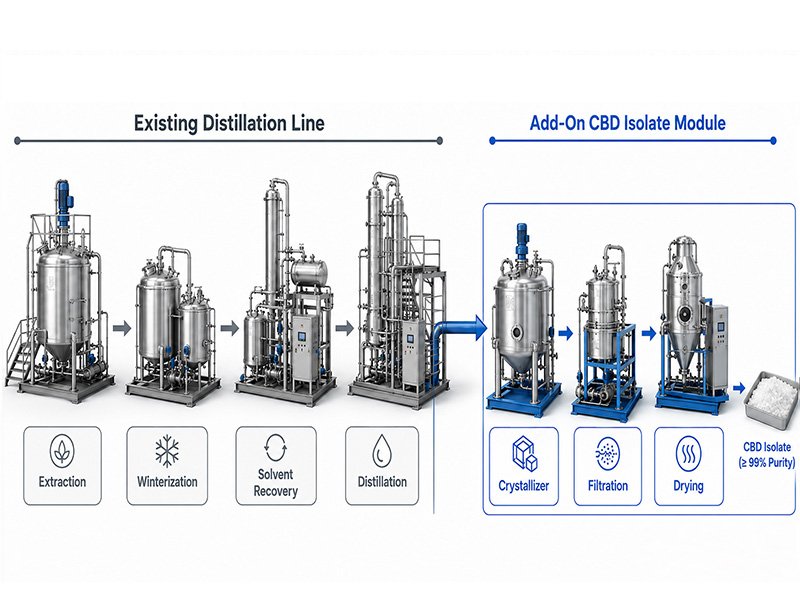
Best for facilities adding CBD crystallization equipment to an existing extraction, winterization, solvent recovery, and distillation equipment.
- Existing Production Line Interface Review
- Matched Crystallization and Downstream Modules
- Reduced Retrofit and Integration Risk
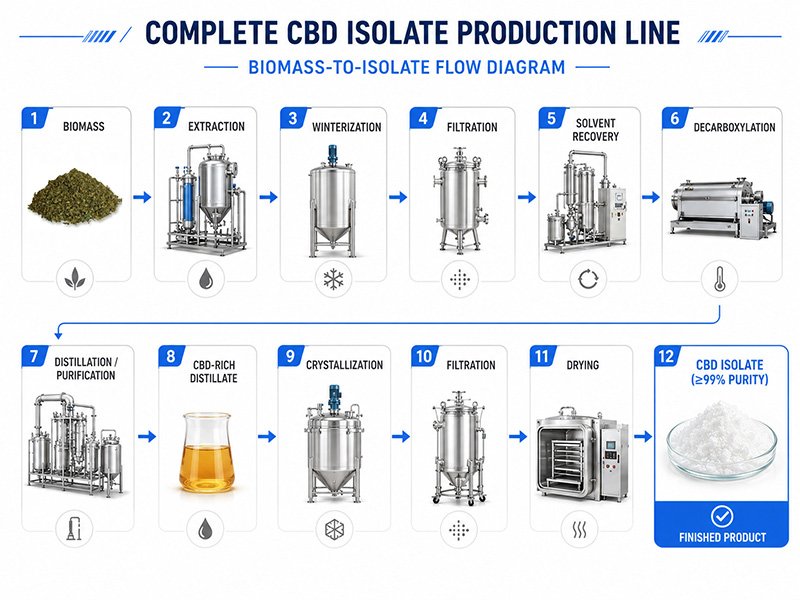
Best for new facilities planning production from hemp biomass or cannabinoid feedstock to finished CBD isolate.
- Biomass-to-Isolate Process Configuration
- Upstream and Downstream Capacity Matching
- Coordinated Equipment and Utility Planning
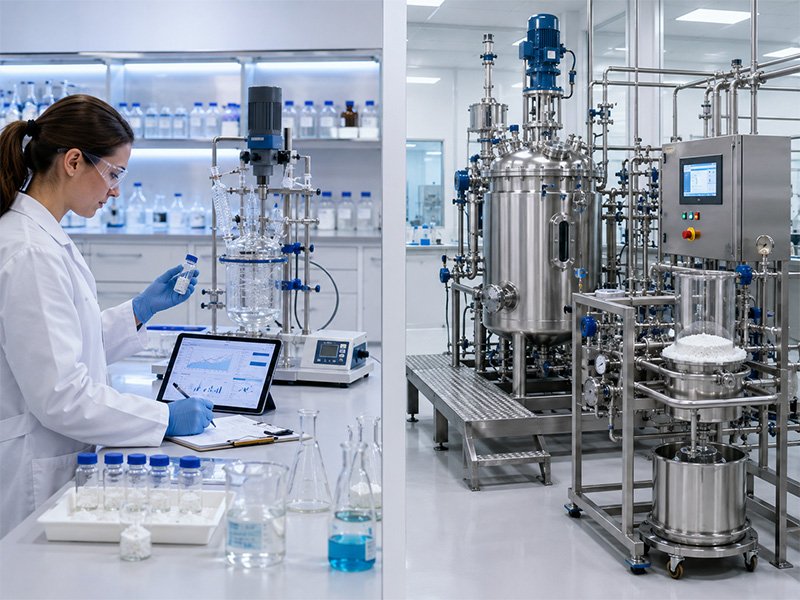
Best for R&D laboratories, process developers and manufacturers preparing for commercial crystallization scale-up.
- Solvent and Process Development
- Pilot Filtration Testing and Batch-Cycle Evaluation
- Scale-Up Data for Commercial Equipment
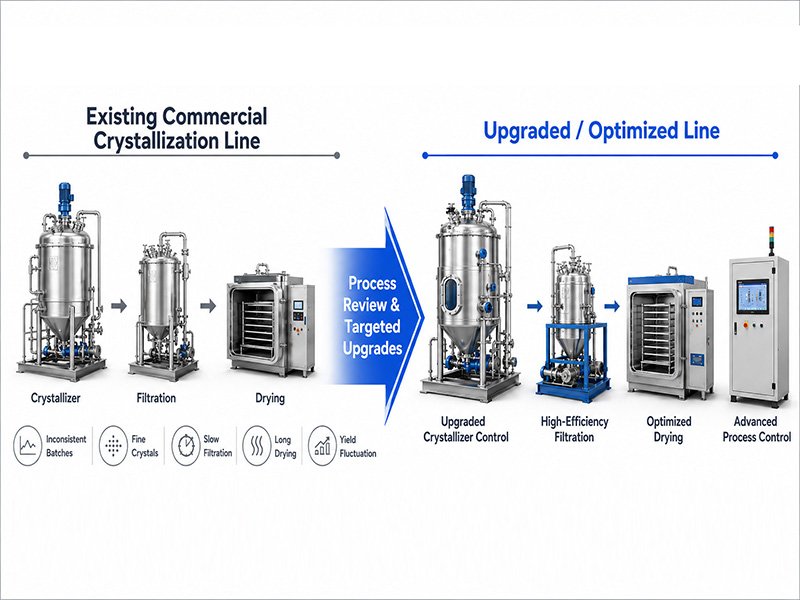
Best for existing plants experiencing inconsistent batches, excessive fine crystals, slow filtration, long drying cycles or fluctuating recovery yield.
- Existing Process and Equipment Review
- Targeted Module and Control Upgrades
- Improved Batch Repeatability and Throughput
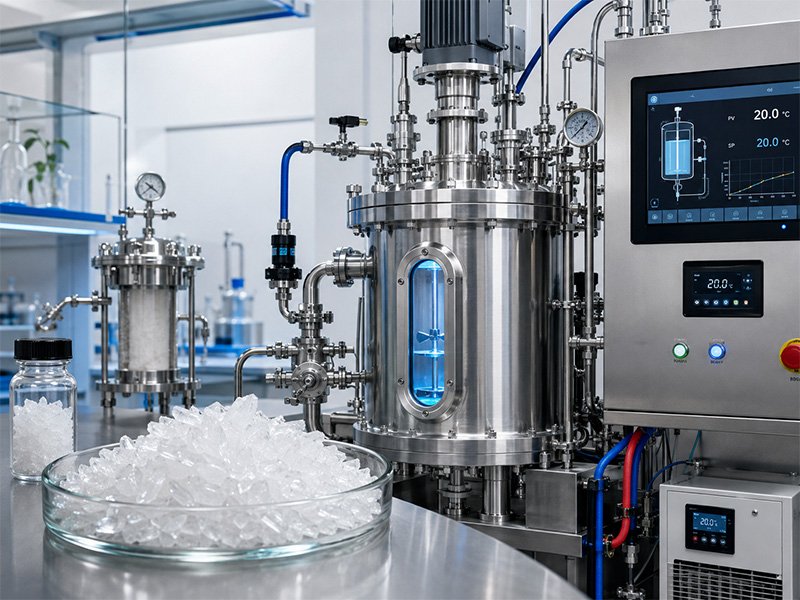
Best for manufacturers developing THCA crystals, purified cannabinoids and selected high-value natural intermediates.
- Feed-Specific Process Evaluation
- Controlled Nucleation and Crystal Growth
- Customized Reactor and Temperature Control
Sample or Pilot Testing Where Required
More About Our Crystallization Equipment
- Crystallization Equipment Parameters
| Parameter | Standard / Optional Specification | Remarks |
| Equipment Type | Batch Crystallization Tank / Crystallization Reactor | Laboratory, pilot or commercial configuration |
| Product Contact Material | SUS316L or SUS304 Stainless Steel | Selected according to product and solvent compatibility |
| Inner Surface Finish | Electrolytic mirror polishing or mechanical polishing | Final polishing grade to be confirmed |
| Outer Structure | SUS304 fully welded insulated structure | Supports heat preservation |
| External Surface Finish | Mirror polished or satin finished | According to project requirements |
| Sterilization Capability | Up to 121°C high-temperature sterilization | Optional; actual operating conditions subject to design confirmation |
| Vent Filter | 0.2 μm hydrophobic vent filter | Optional sanitary venting configuration on request |
| Temperature Monitoring | Temperature monitoring device included | Sensor type and accuracy to be confirmed |
| Pressure Indication | Sanitary pressure gauge | Design pressure and range to be confirmed |
| Sight Glass | Two sight glasses available | Quantity and position can be customized on request |
| Cleaning System | Internal cleaning spray ball | Internal spray ball or CIP configuration optional |
| Nitrogen Connection | Nitrogen inlet available | Optional for nitrogen blanketing where required |
| Tank Connections | Sanitary quick-opening connections | Port size and quantity customized |
| Shaft Seal | Sanitary mechanical seal | Selected according to solvent and vacuum conditions |
| Agitation Control | Variable-frequency speed control | Wide adjustable speed range |
| Agitator Type | Customized according to material and crystal characteristics | Low-shear design can be evaluated |
| Feeding Ports | Feed and auxiliary-addition ports available | Quantity and size customized |
| Sampling Port | Sanitary sampling port available | Position according to vessel design |
| Discharge Design | Bottom or project-specific slurry discharge | Valve size subject to slurry properties |
| Heating and Cooling | Jacketed temperature-control configuration available | Heating and cooling method to be confirmed |
| Vacuum Connection | Available where required | Operating vacuum subject to approved design |
| Electrical Configuration | Standard or explosion-protected option | According to solvent, site classification and local standard |
| Control System | Manual, programmed batch or integrated automation | Selected according to automation requirements |
Yes. HiURTB can review customer-owned reactors, chillers, filters, vacuum systems, dryers or solvent recovery units and determine whether they can be integrated with the new crystallization equipment. Compatibility depends on processing capacity, materials, connection interfaces, control logic and the condition of the existing units.
Yes. The crystallization equipment can be supplied as a reactor package or with selected downstream modules omitted. Customer-owned filtration or drying units should still be checked for batch capacity, solvent compatibility and connection requirements before the final configuration is confirmed.
Yes. The power supply, frequency, control language and selected electrical components of the crystallization equipment can be customized according to the installation country and confirmed technical agreement. Explosion-protection requirements must be confirmed according to the solvent and facility hazardous-area classification.
Yes, provided future expansion is considered during the initial layout and utility planning. Additional reactors, filters or dryers can be added to the crystallization equipment line when sufficient floor space, cooling, vacuum, solvent recovery capacity, piping and control interfaces are reserved.
How to Choose Crystallization Equipment for Cannabinoid Production
Selecting crystallization equipment requires more than choosing a reactor size. Feed suitability, total solution volume, cooling load, batch duration, scale-up data and downstream capacity should be evaluated as one complete production system.
The following sections explain the main technical factors customers should review before requesting a commercial equipment proposal.
Is Your Feed Suitable for Crystallization?
The first step is to determine whether the available feed is sufficiently refined and consistent for selective crystallization.
Crude oil produced by CO2 extraction or another solvent-extraction process may still contain:
- Waxes and lipids
- Pigments and heavy compounds
- Terpenes and volatile components
- THC and minor cannabinoids
- Moisture
- Residual processing solvents
- Suspended particles
- Batch-to-batch composition variations
These components can affect solubility, nucleation, crystal growth, product color, filtration and final purity. Crude extract therefore cannot automatically be sent directly to crystallization equipment.
Depending on the feed, upstream treatment may include:
- Winterization
- Filtration
- Solvent recovery
- Decarboxylation
- Short-path or wiped-film distillation
- Additional purification where required
For initial equipment evaluation, a recent COA is strongly recommended. Useful feed information includes the target cannabinoid concentration, THC and minor cannabinoid profile, moisture, residual solvents, viscosity and previous processing history.
A feed with an established crystallization process may be evaluated from existing production and laboratory data. When crystallization behavior is uncertain, sample testing or pilot verification may be recommended before commercial equipment is finalized.
Feed evaluation helps determine:
- Whether further pretreatment is required
- Which crystallization route may be suitable
- What solvent-handling configuration is needed
- How much cooling capacity is required
- Which filtration and drying equipment should be selected
- Whether laboratory or pilot verification is necessary
This reduces the risk of purchasing a crystallization reactor that is correctly manufactured but unsuitable for the actual feed.
What Crystallization Process Does Your Project Require?
Selecting the right crystallization equipment starts with defining the complete process required for your feed and target product. A cannabinoid crystallization project normally begins with a refined, cannabinoid-rich feed rather than untreated crude extract.
THCA crystallization, often called “diamond mining” in the cannabis industry, may require different feed preparation, solvent handling, nucleation, aging and containment conditions from CBD isolate production. The equipment configuration should therefore be based on the intended THCA crystal product and validated process data.
A typical CBD crystallization process may include:
CBD-Rich Distillate → Feed Evaluation → Solvent Addition → Controlled Dissolution → Seeding → Programmed Cooling → Crystal Growth and Aging → Solid-Liquid Separation → Crystal Washing → Vacuum Drying → Mother-Liquor and Solvent Recovery
Feed preparation
The feed is checked for concentration, impurity profile, moisture and residual solvents. Additional filtration or purification may be required before crystallization.
Controlled dissolution
The feed and selected solvent are heated and mixed until a homogeneous solution is obtained. The reactor must provide suitable agitation, temperature control and solvent-compatible construction.
Seeding and programmed cooling
Seed crystals may be introduced according to the validated process.
Seeding in crystallization should be coordinated with supersaturation, temperature and agitation to improve nucleation timing and batch repeatability.
In a cooling crystallization process, the solution should follow a controlled cooling profile rather than be cooled as rapidly as possible. Excessive cooling rates may produce large quantities of fine crystals that are difficult to filter and wash.
Crystal growth and aging
The batch may be held under controlled temperature and agitation to allow the crystals to grow and reach suitable handling characteristics.
Separation and washing
The crystal slurry is transferred to a vacuum filter, Nutsche filter, centrifuge or another solid-liquid separation unit. The wet crystal cake is washed to reduce surface impurities and mother-liquor carryover.
Vacuum drying
The washed crystals are dried under controlled vacuum and temperature to reduce residual solvent and moisture.
Mother-liquor processing
The remaining liquid may contain uncrystallized target compound, solvent and impurities. Depending on its composition, it may be concentrated, processed through a secondary recovery step or returned to an upstream purification stage.
The exact solvent, temperature, seeding conditions and operating times should be established through validated process data rather than copied from a general commercial recipe.
When ethanol is used, an ethanol recovery system may be configured according to the total mother-liquor and washing-solvent load.
Learn more about solubility, supersaturation, nucleation and crystal growth in our guide to the cannabinoid crystallization process.
How Should Each Crystallization Equipment Module Be Selected?
A commercial crystallization line requires matched reaction, thermal-control, separation, drying and solvent-management modules. The table below explains the main selection basis for each module and why it matters to the complete batch process.
| Equipment Module | Main Selection Basis | Why It Matters |
| Crystallization Reactor | Batch solution volume, material, agitation and slurry discharge | Provides controlled dissolution, cooling, nucleation and crystal growth |
| Heating and Cooling System | Cooling load at the required crystallization temperature | Determines whether the programmed temperature profile can be followed |
| Agitation System | Viscosity, solids concentration, reactor geometry and crystal sensitivity | Supports uniform mixing while limiting crystal damage |
| Vacuum and Condensation System | Solvent properties, vapor load and operating vacuum | Supports closed operation and solvent-vapor collection |
| Filtration and Washing Equipment | Crystal size, slurry behavior, filter area and containment | Separates crystals and reduces mother-liquor carryover |
| Vacuum Drying Equipment | Wet-crystal load, retained solvent and residual solvent target | Matches drying capacity to the crystallization batch |
| Solvent Recovery System | Solvent type, total solvent load and required recovery rate | Reduces solvent loss and prevents recovery bottlenecks |
| Automation and Controls | Recipe management, alarms, data recording and integration | Improves batch repeatability and reduces operator dependence |
Final equipment selection depends on the feed, solvent, batch size, required production rhythm and existing upstream and downstream equipment.
How Should Crystallization Equipment Be Sized?
Crystallizer capacity should not be selected from feed weight alone.
A simplified starting point is:
Total Batch Solution Volume = Feed Volume + Solvent Volume + Required Operating Allowance
The operating allowance must account for:
- Recommended working fill ratio
- Agitation space
- Vacuum and vapor headspace
- Slurry formation
- Safe feeding and transfer
- Possible foaming or expansion
- Discharge requirements
For example, processing 100 kg of feed per day does not automatically require a 100 L crystallization reactor. The final working volume may be significantly larger after adding the crystallization solvent.
Daily production capacity also depends on the complete batch cycle:
| Production Stage | Capacity Consideration |
| Feed and solvent loading | Transfer rate and available vessel space |
| Dissolution | Heating duty and agitation |
| Programmed cooling | Chiller capacity at the target temperature |
| Crystal growth and aging | Required residence time |
| Slurry discharge | Valve size and transfer method |
| Filtration and washing | Filter area and cake permeability |
| Vacuum drying | Wet-crystal loading and drying time |
| Solvent recovery | Solvent load and recovery rate |
| Cleaning and changeover | Time between production batches |
The required equipment configuration may therefore involve:
- One larger crystallization reactor
- Multiple reactors operating on staggered schedules
- One reactor with multiple filters or dryers
- Parallel production modules
- Additional solvent recovery capacity
The crystallization reactor, filter, dryer and solvent recovery unit should all be matched to the same production rhythm.
How Can Laboratory Crystallization Be Scaled to Commercial Production?
A successful laboratory batch cannot be transferred to a commercial reactor by multiplying all parameters by the same scale factor.
As the crystallization equipment volume increases:
- The heat-transfer-area-to-volume ratio changes
- Heating and cooling times change
- Temperature gradients may increase
- Agitation flow patterns change
- Crystal suspension becomes more difficult
- Nucleation behavior may change
- Crystal collisions and breakage may increase
- Slurry discharge becomes more demanding
- Filtration and drying loads increase
A laboratory chiller may reach the required temperature easily, while a commercial system may not have enough cooling capacity to follow the same programmed cooling profile.
Similarly, an agitator that performs well in a small glass reactor may not provide equivalent mixing or crystal suspension in a large stainless steel vessel.
Useful laboratory and pilot data includes:
- Feed and solvent quantities
- Dissolution temperature and time
- Cooling profile
- Seeding conditions
- Nucleation temperature
- Agitation speed and agitator type
- Crystal growth and aging time
- Crystal size and slurry behavior
- Filtration time
- Wet-cake liquid retention
- Washing requirements
- Drying time
- Product purity and recovery yield
- Mother-liquor composition
HiURTB uses the available data to evaluate reactor geometry, cooling load, agitation, filtration, drying and batch-control requirements at the target commercial scale.
Pilot verification is particularly valuable when:
- The feed varies between batches
- The crystallization process is newly developed
- Filtration behavior is uncertain
- Commercial volume is much larger than laboratory scale
- Crystal size is critical to downstream processing
- Flammable solvents require a closed system
- Fixed purity or recovery targets are commercially important
Pilot testing cannot remove every scale-up risk, but it provides a stronger basis for commercial equipment selection and reduces repeated production adjustments after installation.
How Can Common Crystallization Equipment Bottlenecks Be Avoided?
Fast crystal formation does not necessarily mean high daily production output.
| Bottleneck | What to Check | Possible Result |
| Slow filtration | Crystal size, slurry viscosity, filter area and filter media | Long waiting time between batches |
| High mother-liquor retention | Cake permeability, filtration pressure and washing method | Higher impurity carryover and drying load |
| Long drying cycle | Wet-crystal mass, retained solvent, vacuum and heating capacity | Dryer becomes the production bottleneck |
| Slow solvent recovery | Total mother liquor, washing solvent and process vapor load | Next batch waits for solvent handling |
| Difficult slurry transfer | Discharge valve, piping and crystal settling behavior | Product loss and extended cleaning time |
Poor crystallization results are not always caused by the crystallization equipment alone. No crystallization, oiling out, excessive fine crystals, low recovery yield or unstable purity may also result from feed composition, solvent selection, seeding, cooling conditions or upstream purification.
Feed, process and equipment conditions should therefore be evaluated together before equipment replacement or modification is recommended.
What Information Is Required for a Crystallization Equipment Quotation?
To prepare a suitable technical proposal, please provide as much of the following information as possible.
Feed information
- Feed material
- Recent COA
- Target cannabinoid concentration
- THC and minor cannabinoid profile
- Moisture and residual solvents
- Feed viscosity and physical state
- Previous processing steps
- Batch-to-batch consistency
Production target
- Feed input per batch or per day
- Target product
- Required purity
- Expected recovery yield, where established
- Required crystal form or particle size
- Working hours per day
- Number of batches per day
- Future expansion target
Process information
- Existing laboratory or pilot data
- Intended solvent
- Solvent-to-feed ratio, if validated
- Dissolution temperature
- Cooling and holding profile
- Seeding method
- Expected batch time
- Filtration and washing method
- Drying temperature and residual solvent target
Existing equipment
- Extraction system
- Winterization and filtration equipment
- Solvent recovery equipment
- Decarboxylation reactor
- Distillation system
- Existing crystallization reactor
- Filter or centrifuge
- Vacuum dryer
Site and utility information
- Installation country and location
- Available floor space
- Power supply and frequency
- Heating utility
- Cooling utility
- Vacuum source
- Compressed air
- Nitrogen supply
- Ventilation conditions
- Hazardous-area classification
- Local electrical and explosion-protection requirements
Automation requirements
- Manual or programmed operation
- Recipe storage
- Batch data recording
- Audit trail
- Remote monitoring
- Alarm and safety interlocks
- Connection with existing equipment controls
After reviewing this information, HiURTB can recommend the required crystallization reactor, temperature-control system, filtration and washing equipment, vacuum dryer, solvent recovery capacity and automation level.
Final purity, recovery yield and crystal characteristics depend on feed quality and validated operating conditions. Sample testing or pilot verification may be recommended before the commercial crystallization equipment is finalized.

