
In commercial cannabis and hemp processing, post-extraction decarboxylation can become a bottleneck when viscous extracts heat unevenly, foam under vacuum, or produce inconsistent cannabinoid results.
This guide explains what happens during the process, how your batch moves from feed assessment to endpoint confirmation, and which operating decisions can improve repeatability before distillation or formulation.
What Is Decarboxylation?
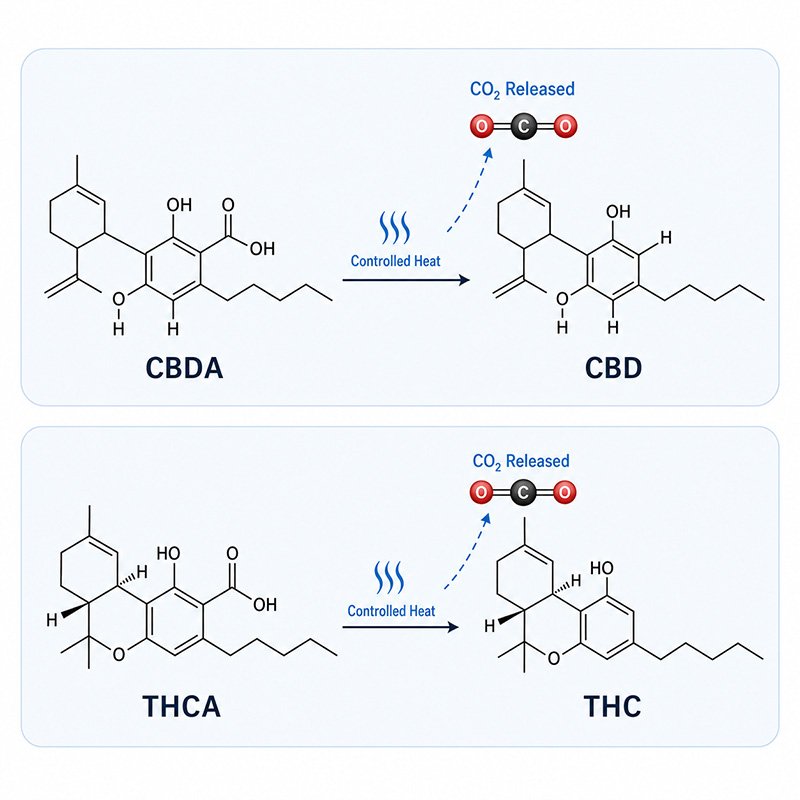
Cannabis plants naturally contain many cannabinoids in acidic forms. During decarboxylation, controlled heat removes part of the molecule as carbon dioxide (CO2). THCA becomes THC, CBDA becomes CBD, and other acidic cannabinoids undergo similar conversions.
Your goal is not simply to make the extract hot. You need to bring the full batch to the cannabinoid profile required by the next production step while avoiding unnecessary degradation, darkening, volatile loss, foaming, or product carryover.
Post-extraction decarboxylation is therefore a controlled production operation involving heating, mixing, gas release, vapor handling, sampling, and endpoint confirmation.
How Post-Extraction Decarboxylation Works Step by Step
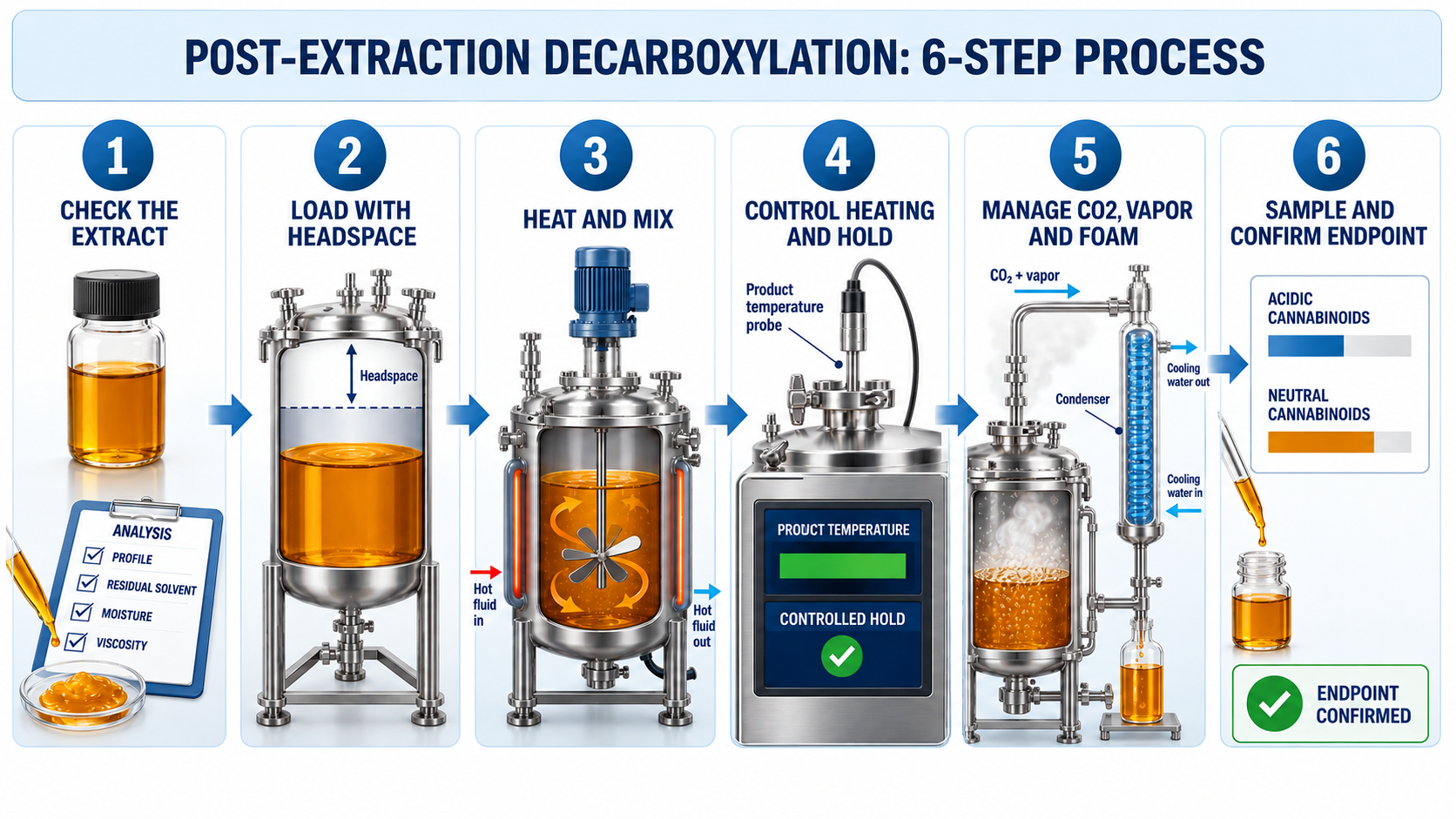
Check the Extract Before Processing
Begin with the actual condition of your feed. Check the cannabinoid profile, residual solvent, moisture, viscosity, batch volume, and intended downstream product.
A CO2 crude extract, an ethanol extract, and a partially refined oil can heat, mix, and release vapor differently, so you should not automatically use the same program.
Classifying each incoming batch and recording these starting conditions gives you a sound basis for selecting the heat-up rate, agitation, vacuum strategy, and endpoint instead of correcting avoidable problems during the run.
Load the Reactor With Enough Headspace
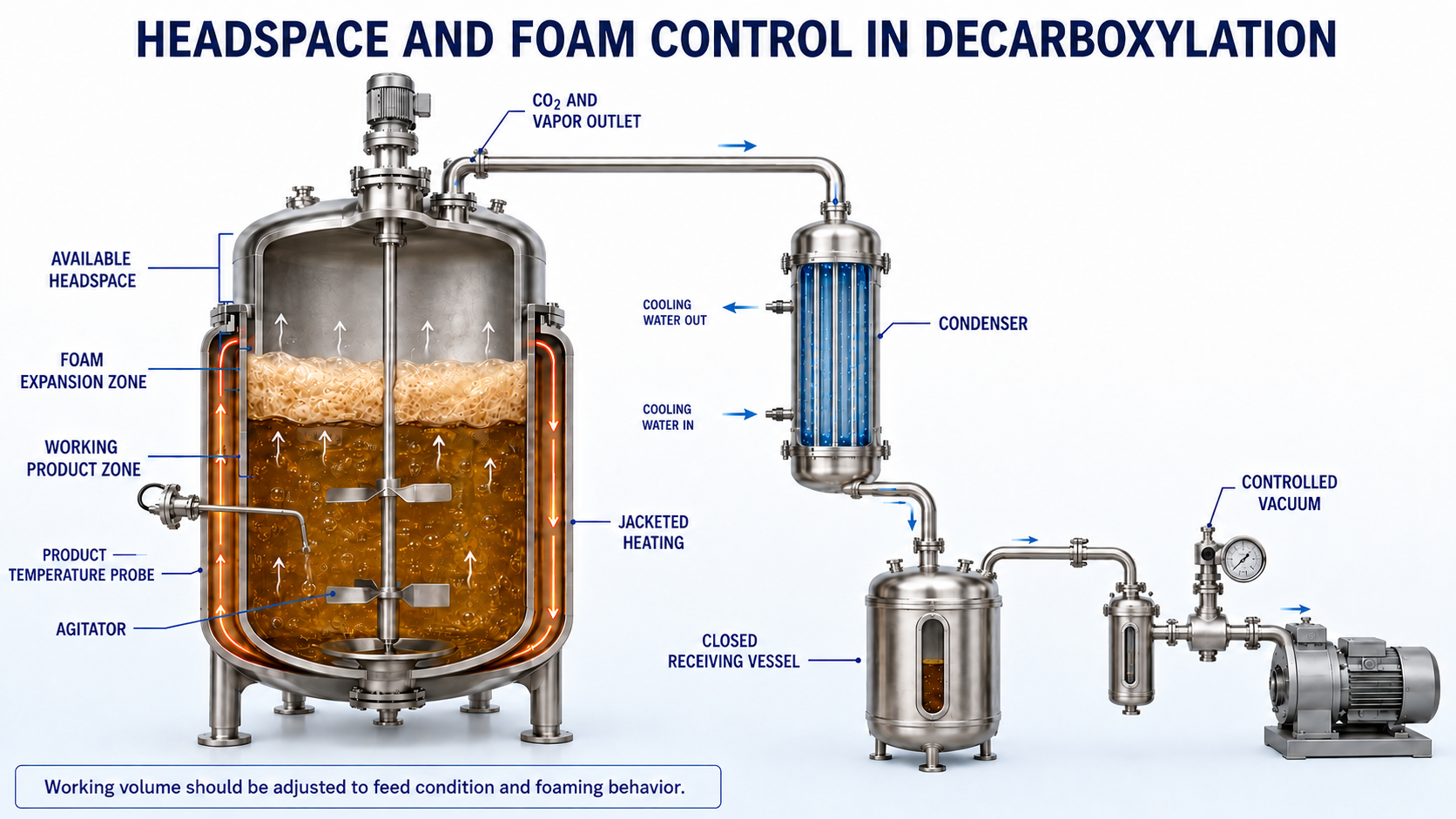
Your working volume must leave room for gas and foam.
When selecting a decarboxylation reactor, calculate the usable working volume from your material’s foaming behavior rather than relying only on the nominal vessel capacity.
Around 70% of nominal vessel volume can be used as an initial planning value, but it is not a fixed operating rule.
Reduce the load when the extract contains more solvent or moisture, foams strongly, has very high viscosity, or requires more space for effective mixing.
Confirm the working load during trial batches and mark an operating limit for each feed type; sufficient headspace helps you prevent carryover and run the batch without repeated stops caused by foam.
Heat and Mix the Extract
The jacket supplies heat through the reactor wall while the agitator circulates your extract. As the material warms, it often becomes easier to mix. Monitor the actual product temperature rather than relying only on the jacket setting because the center of a large batch may heat more slowly than the vessel wall. Use an agitation speed that renews material at the heated surface without pulling excessive gas into the batch, and compare product-temperature trends between runs. This helps you identify poor heat transfer early and achieve a more uniform conversion across the vessel.
Control the Heating and Holding Stage
Once your batch reaches the required product temperature, maintain controlled heating for the selected holding period. Start the effective hold time from the product temperature—not from the jacket setpoint or the moment heating begins. Higher temperatures generally shorten the process, but excessive heat or an unnecessarily long hold can increase degradation, darkening, and volatile loss. Record product temperature, heating time, effective hold time, agitation, and pressure or vacuum for every batch so you can refine the cycle without sacrificing product quality.
Manage CO2, Vapor, and Foam
Decarboxylation releases CO2. Water and residual extraction solvent may also evaporate as your batch heats. In a viscous extract, the gas and vapor can become trapped and create foam. Increase temperature in controlled stages, observe the foam response before advancing the next stage, and apply vacuum gradually rather than opening it fully at once. Combine sufficient headspace with adjustable agitation and an appropriate condensation path to keep valuable material out of the condenser and vacuum line while maintaining steady vapor removal.
Hold, Sample, and Confirm the Endpoint
Bubbling usually decreases as gas and volatiles leave your material, but appearance alone does not confirm completion. Define the acceptable endpoint before the run, take a representative sample, and use a validated analytical method to compare the remaining acidic cannabinoids with your required neutral cannabinoid profile. Trend the results alongside the recorded process data; this allows you to shorten unnecessary holding without releasing an incomplete batch. After confirmation, transfer the extract at a temperature suitable for discharge and your next operation.
Frequently Asked Questions
Why is post-extraction decarboxylation different from heating flower?
Dry flower is usually heated as a solid bed, while an extract is a concentrated and often viscous liquid or semi-solid. Industrial post-extraction processing must distribute heat through the batch, provide mixing, leave space for foam, manage condensable vapors, and confirm the endpoint against a target cannabinoid profile.
What decarboxylation temperature and time should you use?
There is no universal industrial temperature-and-time pair. The suitable window depends on the cannabinoid profile, extract condition, batch size, actual product temperature, mixing efficiency, pressure or vacuum, and required endpoint. Higher temperature can shorten conversion time but may also increase degradation, darkening, and volatile loss.
What information should you provide when selecting a decarboxylation reactor?
To select a suitable reactor, provide your extract type, residual solvent and moisture condition, batch volume, viscosity, target cannabinoid profile, required batches per day, preferred vacuum level, heating medium, electrical supply, and downstream process.
These details help determine the working volume, agitation, condenser, vacuum system, and heating configuration.
Why does extract foam during decarboxylation?
CO2 from the reaction, together with water and residual solvent vapors, can become trapped in viscous extract. Rapid heating, sudden vacuum, strong agitation, or excessive loading can make the foam expand quickly and carry material into the condenser or vacuum line.
Is 70% always the correct reactor loading rate?
No. Approximately 70% is an initial planning value, not a fixed operating rule. A lower load may be required when the extract contains residual solvent or moisture, has high viscosity, foams strongly, or needs more headspace for mixing and vapor release.
Can decarboxylation be performed under vacuum?
Yes, when the reactor and vapor-handling system are designed for controlled vacuum. Apply vacuum gradually according to material behavior. A rapid pressure reduction can intensify boiling and foam, while the condenser and receiver must be able to manage the resulting condensable vapors.
How do you know when decarboxylation is complete?
Use a validated analytical method to compare the remaining acidic cannabinoids with the required neutral cannabinoid profile. Time, color, and bubbling can help operators observe the process, but they are not reliable endpoint specifications by themselves.
What causes incomplete or inconsistent conversion?
Common causes include measuring jacket temperature instead of product temperature, starting the hold period too early, poor mixing, an oversized batch, insufficient effective hold time, uneven sampling, or using the same program for extracts with different compositions and viscosities.
Why do laboratory conditions change during scale-up?
A larger reactor has a different surface-to-volume ratio, heating curve, mixing pattern, batch depth, and vapor load. Heat must travel farther, the center of the batch may warm more slowly, and more gas must leave through the same type of vapor path. Scale-up should therefore consider the complete batch cycle, not vessel volume alone.
What decarboxylation equipment is needed for industrial processing?
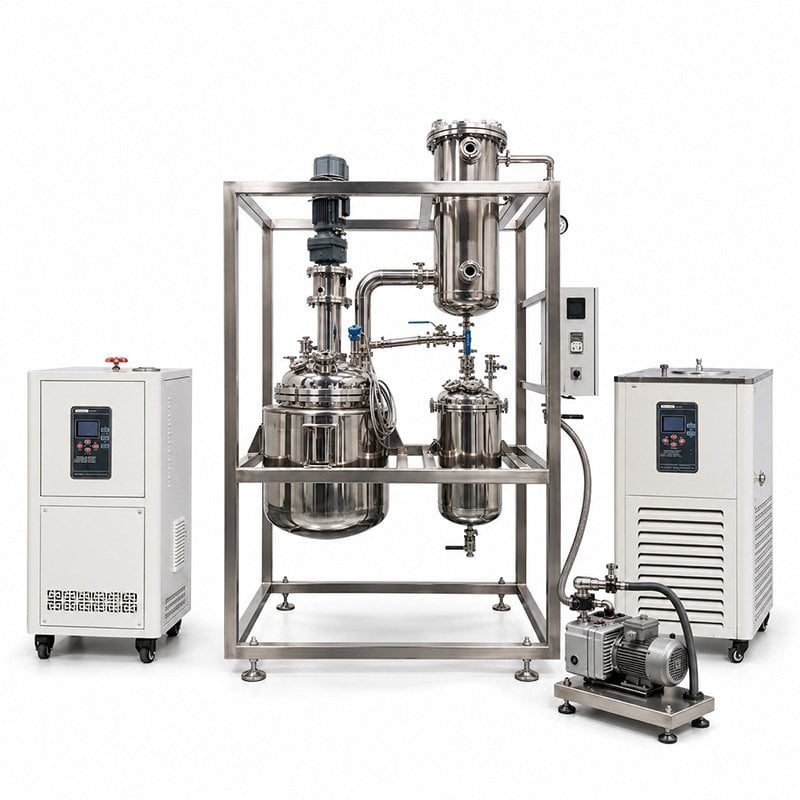
A typical system may include a jacketed reactor, an agitation system selected for the extract viscosity, product-temperature and pressure instruments, controlled vacuum, a condenser, a receiving vessel, and suitable vapor protection.
The required configuration depends on the feed, batch size, solvent condition, and destination requirements.
Your material viscosity, residual solvent, foaming behavior, batch size, and required cycle time determine whether you need stronger agitation, more headspace, staged vacuum control, or greater condensation capacity.
Should decarboxylation occur before or after extraction?
Both routes are possible. Pre-extraction decarboxylation treats dry biomass, while post-extraction decarboxylation processes a smaller volume of concentrated extract in a mixed vessel. Choose the position according to the extraction method, target product, terpene strategy, throughput, and downstream purification plan.
How does decarboxylation fit into a CO2 or ethanol processing line?
A common CO2 route begins with CO2 extraction equipment, followed by optional winterization and filtration, post-extraction decarboxylation, and then distillation or final-oil production.
A common ethanol route is extraction, winterization, filtration, solvent recovery, decarboxylation, and distillation. Residual ethanol should be evaluated before heating.
Why decarboxylate before wiped-film or short-path distillation?
Controlled decarboxylation can reduce unexpected CO2 release and help stabilize feed behavior before the extract enters downstream cannabis distillation equipment.
The required endpoint and transfer temperature still depend on the distillation system and the intended product.
What reactor size should you choose?
Size the reactor from the effective working load, full batch cycle, required batches per day, foaming behavior, and upstream and downstream capacity. Nominal vessel volume alone does not represent usable production capacity, especially when the material needs extra headspace.
Technical References
- Wang et al. (2016), Decarboxylation Study of Acidic Cannabinoids
- Moreno et al. (2020), Cannabinoid Decarboxylation: A Comparative Kinetic Study
- Filer (2022), Acidic Cannabinoid Decarboxylation
- NIST IR 8519 (2024), Cannabis Laboratory Quality Assurance Program
- NIST (2025), THCA Decarboxylation and Accurate GC-MS Quantitation of Total THC
Plan Your Decarboxylation Process
Planning a post-extraction decarboxylation process?
HiURTB can help evaluate your feed condition, batch volume, target cannabinoid profile, foaming risk, vacuum, and downstream requirements.
Share your material and production goals with us to discuss a suitable reactor, agitation, condensation, and process configuration for pilot or commercial production.

